
Priced Out of Protection: Abuja’s Poorest Families Face Health Crisis Without Insurance
 Oluwafunbi Bello
ABUJA, Nigeria – On a sweltering Tuesday morning at Wuse Market, Mama Amina, a petite trader balancing a basket of tomatoes on her head, hesitated before explaining why her daughter had missed school for a week. The eight-year-old had been battling a persistent fever, yet the family had avoided the hospital entirely.
“I wanted to take her to the clinic,” Mama Amina said, her voice cracking. “But I simply cannot afford it. I can only buy medicines from the chemist for relief.”
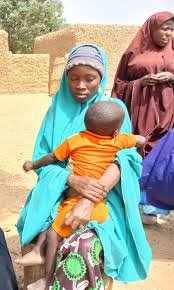
Despite government-backed schemes promising affordable health coverage, thousands of families like hers remain uninsured in Abuja, Nigeria’s capital. The gap has left low-income residents relying on self-medication, over-the-counter drugs, or traditional remedies—choices that carry significant risks, particularly for children and the chronically ill.
Awareness and Mistrust: The First Barrier
At the National Health Insurance Authority (NHIA) office in Garki, officials insist that affordability has been addressed with initiatives such as the National Mobile Health Insurance Program (NMHIP), offering coverage for as low as ₦9,000 per person annually. A senior NHIA staff member told Oluwafunbi Bello, “We have introduced affordable mobile schemes… but how to make this known to people will be worked on soon.”
Yet, in the bustling streets and quiet alleyways of Abuja’s low-income neighbourhoods, the information has not trickled down. Mrs Remi Sewa, a hairdresser in Kubwa, had never heard of the insurance programme.
“I’ve never heard about Health Insurance,” she said, eyes wide with surprise. “I didn’t know something like this existed for people like me.”
The Cost of Skepticism
Even when awareness exists, trust is scarce. Mr Mukhtar, a farmer in Kuje, acknowledges the potential benefits but has avoided enrollment.
“I couldn’t afford it, and its price is always changing,” he explained. “Besides, I don’t trust government health programmes. Everything government-run is poorly managed or implemented in Nigeria.”
He suggested practical reforms: “If the government makes it easier to register online and creates more affordable schemes for low-income earners, it will be better.”
Transport workers, artisans, and informal labourers echo the same frustration. Mr Stephen, a commercial bus driver navigating the morning traffic in Garki, said, “The Health Insurance will benefit me and anybody who can afford to enrol. But right now, it feels like a luxury, not a safety net.”
Daily Struggles in Hospitals
Healthcare professionals witness the consequences firsthand. Nurse Sarah, working at a general hospital in Abuja, recounts daily cases of preventable suffering.
“Just last week, a woman came in with her three-year-old child suffering from typhoid. She couldn’t even pay for the test, let alone the medication,” Sarah said. “If they had insurance, treatment would have been accessible immediately.”
Doctors and community health workers warn that the combination of rising medical costs and low insurance coverage could exacerbate preventable deaths among Nigeria’s poorest communities.
Systemic Barriers
Experts say that bureaucracy, misinformation, and inconsistent premium costs exacerbate the issue. Many residents are deterred by complex enrollment processes, lack of documentation, or the need to physically visit offices—an often costly and time-consuming exercise.
Health economist Dr. Joseph Okoro explained, “The structural challenges in accessing health insurance in Nigeria are not only financial. They are systemic. A household living on less than ₦50,000 per month faces a daily choice between feeding the family and paying for healthcare coverage.”
The Road Ahead: Bridging the Gap
Some hope comes from recent initiatives. The ₦9,000 NMHIP mobile plan is designed for low-income earners and could dramatically increase coverage—if citizens are informed and can trust public health systems. Community health workers like Fatima Bello are trying to bridge the gap by educating residents.
“We visit homes, talk to market traders and artisans, and explain that insurance is not just for the wealthy,” she said. “But trust has to be rebuilt. Many people are sceptical because of past failures.”
A Call for Practical Reform
For Abuja’s poorest residents, these reforms are not just policy—they are a lifeline. Mama Amina, standing outside her small stall, summarises the dilemma poignantly:
“I don’t want my children to suffer. I want them to be healthy and in school. But when I have to choose between feeding them and taking them to the hospital, food comes first. Health insurance will help—but only if it is truly accessible to people like me.”
Unless awareness campaigns, affordable schemes, and streamlined registration processes are implemented, experts warn, many Nigerian families will remain trapped in the dangerous cycle of poverty and poor health—left uninsured in a system that promises protection yet delivers it too few.
About the Author

 Mirian Gom
 Korede Abdullah
 Oluwatobi Adu
 Otamere Gladness