


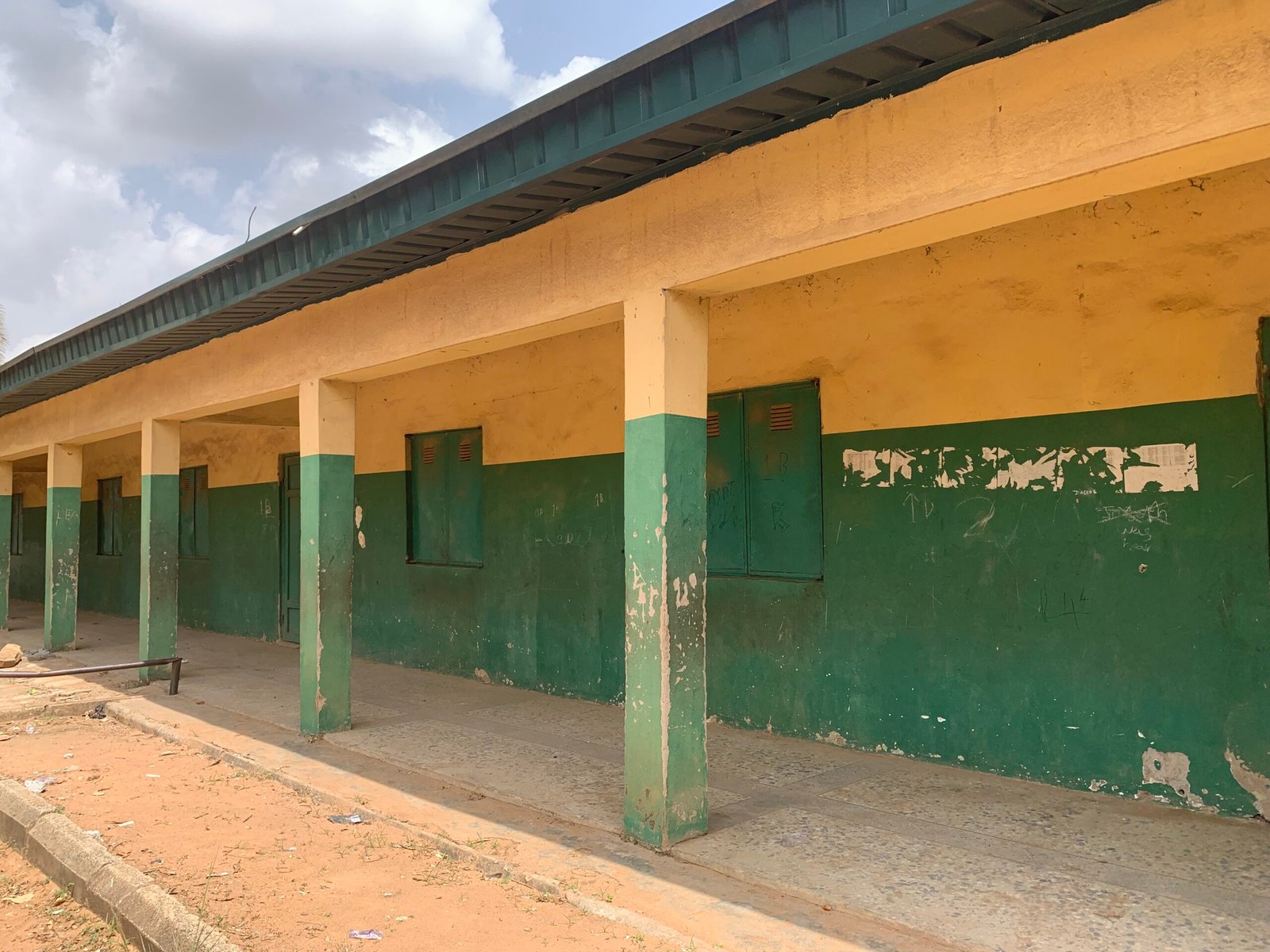
ABUJA, Nigeria – In Nigeria’s Federal Capital Territory, where futures should be shaped, a quiet crisis is unfolding behind locked classroom doors as recurrent teachers’ strikes leave thousands of children stranded at home, disrupt learning, and deepen inequality. What should mark the start of a new school term has instead become a cycle of silence and uncertainty for families across Abuja, driven by unresolved welfare disputes, including unpaid salaries and allowances. Since August 2023, when the current administration led by Minister Nyesom Wike assumed office, repeated industrial actions have emptied classrooms and fractured academic continuity, leaving anxious households and interrupted futures, Oluwatobi Adu writes.
A Childhood Interrupted
For Abdullahi, a primary school pupil preparing for the Common Entrance examination, the strike has transformed what should be a critical academic period into a waiting game.
“I feel happy,” he says at first—an instinctive reaction shared by many children when school doors close. But the sentiment quickly shifts. “I miss my classroom very well… I feel like we should have resumed.”
His words capture a tension often overlooked in policy debates: the emotional and developmental cost of disrupted schooling. Beneath the temporary excitement lies a growing academic gap.
“We prefer that schools resume,” he adds, his voice reflecting both longing and quiet urgency. Then, with a clarity that cuts through bureaucratic complexity, he offers a solution: “Let them pay our teachers.”
Abdullahi’s plea echoes across the territory—a simple demand rooted in fairness, yet unresolved for years.
A Pattern of Disruption
The crisis is not a one-off event but a pattern. Since 2023, public primary school teachers in the FCT have embarked on at least five separate strikes, collectively costing pupils an estimated 165 days of learning.
Each strike follows a familiar script: unresolved arrears, unimplemented agreements, renewed negotiations, and eventual breakdown. The cumulative effect is not merely lost time but fractured educational continuity.
Recent signals suggest a possible resolution. Following a high-level meeting with authorities, the leadership of the teachers’ union indicated optimism that the ongoing strike may soon be called off. Yet for many families, such assurances have begun to sound routine—promises that offer temporary relief but rarely lasting solutions.
Families Under Pressure
Beyond the classrooms, the impact is reshaping daily life for parents and guardians.
For Baba Emeka, the disruption has forced difficult compromises. With schools shut, his child now spends time assisting with petty trading.
“Yes, it is an avenue for the child to sell pure,” he says.
His response, though brief, reveals a deeper reality: when education stalls, survival strategies take over. For many low-income families, idle time becomes an economic opportunity—one that risks normalising child labour and eroding long-term educational priorities.
Another parent, Mr. Bodmark, describes a different coping mechanism—private lessons.
“For now, I can’t say because they have not resumed… they said they entered strike,” he explains.
“I just put him in private lessons.”
But his frustration is unmistakable. “If I say anything, will they listen to me? The government does not have a listening ear… everybody minds your business.”
His words reflect a growing sense of disengagement—an erosion of trust between citizens and institutions meant to serve them.
Confusion Within the System
Even within the education system, the disruption breeds uncertainty.
Mr. Ashiru, a PTA teacher, recounts arriving at school only to discover that classes would not hold.
“I don’t know about the strike; it is when I got to school, I was told school has not resumed.”
Such confusion underscores a breakdown not only in labour relations but also in communication—leaving teachers, parents, and pupils navigating a system without clear direction.
The Academic Toll
For education experts, the consequences extend far beyond missed lessons.

“When the lesson begins at the early time and the strike cuts the lesson along the line, some of the children do not come on time… it affects the academic performance at the end,” he explains.
The disruption, he notes, weakens discipline, consistency, and retention—key elements of effective learning.
For pupils preparing for crucial examinations, the stakes are even higher.
“They are facing a lot of challenges because of the time frame… the time it will take them to prepare for the exam will be shortened,” he says.
The result is confusion, reduced confidence, and poorer outcomes.
“It’s actually affecting their performance… they will get a lot of confusion along the line.”
Inside schools, the effect is equally paralysing.
“The school is not progressing currently because of this strike.”
In simple terms, the system has stalled.
A Generation at Risk
What emerges from these accounts is not just a labour dispute but a structural crisis—one that threatens to widen inequality and undermine the promise of public education.
Children from wealthier households may bridge the gap through private tutoring. Those from less privileged backgrounds, however, risk falling irreversibly behind.
Over time, this disparity compounds, shaping access to secondary education, employment opportunities, and life outcomes.
The classroom, once a leveling ground, is becoming a dividing line.
Beyond Numbers: The Human Cost
Statistics—days lost, strikes counted—tell only part of the story. The deeper cost is human.
It is in the child who forgets previously learned concepts.
The parent who sacrifices income to pay for extra lessons.
The teacher whose morale erodes under unpaid labour.
And perhaps most critically, it is in the gradual normalisation of disruption—when instability becomes the expected state of education.
The Road to Resolution
Across all voices—pupils, parents, teachers, and experts—there is a shared consensus: the current cycle is unsustainable.
The demands are neither new nor complex—timely payment of salaries, fulfilment of agreements, improved infrastructure, and consistent dialogue.
Yet their implementation remains elusive.
A sustainable resolution will require more than reactive negotiations. It demands a structural shift—one that prioritises teacher welfare as a cornerstone of educational stability.
Because when teachers are neglected, classrooms close. And when classrooms close, futures narrow.
A Call That Cannot Wait
The crisis unfolding in Abuja is a warning—one that extends beyond the FCT to the broader Nigerian education system.
Each lost school day is a lost opportunity. Each unresolved dispute is a step further from equitable education.
For Abdullahi and thousands like him, the solution is simple and urgent.
“Let them pay our teachers.”
Until that happens consistently and sustainably, the cycle will continue—and with it, the quiet theft of a generation’s future.





Join the conversation