
 Oluwatobi Adu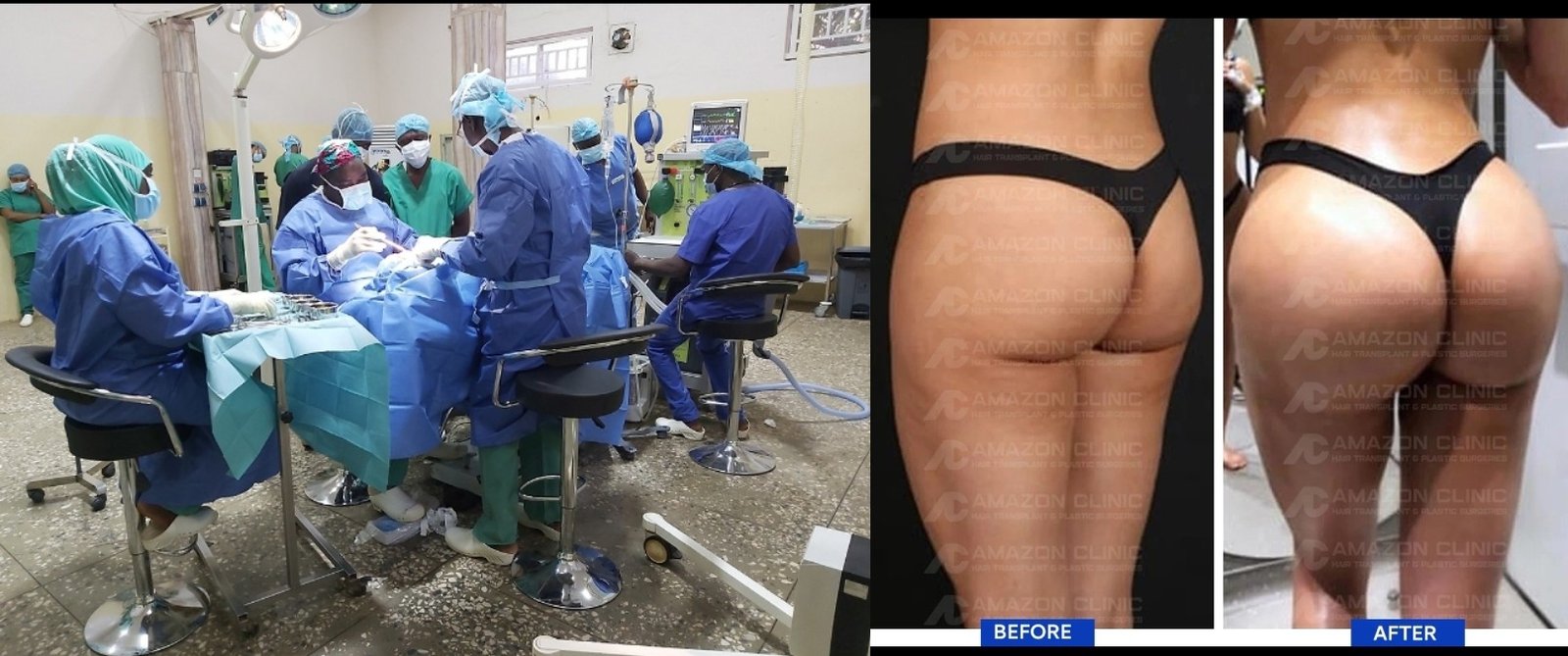
LAGOS, Nigeria – In a Lagos hospital ward, a young woman lay fighting for her life—her body swollen, her blood counts rising, her family watching helplessly as hope slipped away. Days earlier, she had pursued what social media promised: a “perfect” body through a Brazilian Butt Lift (BBL). Instead, she became another cautionary tale in a growing, largely unregulated cosmetic surgery market in Nigeria.
Across the country, the pursuit of enhanced curves has evolved from a fringe aspiration into a booming, controversial trend—fueled by celebrity culture, social media validation, and deep-seated insecurities about body image. Yet beneath the glamour lies a troubling reality: one of the world’s most dangerous cosmetic procedures gaining ground in a healthcare system struggling with oversight.
In this report, Oluwatobi Adu, examines the human cost, systemic gaps, and cultural tensions driving Nigeria’s BBL surge—raising urgent questions about safety, identity, and the price of beauty.
A Life Cut Short
In mid-March 2026, the death of Nigerian socialite Elena Jessica after complications from a second BBL procedure sent shockwaves through online communities.
Her younger sister, Nelli, recounted the harrowing decline following surgery performed on February 6 at a Lagos clinic.
“Even with antibiotics, her condition kept getting worse. Her white blood cell count continued to rise. Her buttocks, hips and calves became very swollen, tight, red, and inflamed. The doctors assumed that too much fat had been injected, which might have disrupted proper blood flow,” she said.
Elena’s story, amplified across social media, reignited debate about the safety of cosmetic surgery in Nigeria. But beyond the headlines lies a quieter truth: her case is not isolated.
Beauty, Validation, and a Divided Public
For many young Nigerian women, BBL represents more than aesthetics—it is seen as a gateway to confidence, social mobility, and acceptance.
“I have always wished to have plastic surgery done but that will be after I give birth to my kids. I believe it gives confidence to women, based on the influencer I have seen that I have undergone the surgery,” said Miss Jane, a woman in her mid-20s.
Others reject the trend outright.
“Why do I want to change my body? I love my God given body, and I believe every young woman living in Nigeria should do the same,” said Miss Bella, in her mid-30s.
Between these contrasting views lies a widening cultural fault line—one shaped by digital influence, shifting beauty standards, and the pressures of visibility in an increasingly online world.
The Hidden Dangers Behind the Curves
Globally, the BBL procedure carries one of the highest mortality rates among cosmetic surgeries—estimated at about 1 in every 3,000 procedures.
The primary risk is fat embolism, a potentially fatal condition in which injected fat enters the bloodstream and blocks critical organs such as the lungs or heart.
Beyond mortality, patients face risks including infection, severe blood loss, deep vein thrombosis, anaesthesia complications, and long-term physical damage.
Despite these dangers, demand continues to rise—often outpacing awareness.
The Cost of Beauty in a Fragile Economy
In Nigeria, BBL is not just medically risky—it is financially draining.
According to influencer Adeife, the procedure can cost between ₦10 million and ₦14 million, with post-surgery care—particularly specialised massages—adding up to ₦3 million.
Economist Abdulnaseer warned of broader economic implications.
“These products, for instance, the BBL, the Brazilian hair and other surgeries, are products of another country,” he said. “It puts pressure on our exchange rate and it’s weakening the network.”
He added that peer pressure among youths is diverting financial resources away from productive investments, stating that it is “killing the initiative of our youth”.
Social Media and the Crisis of Identity
For sociologist Dr. Oluwafemi Amos Idowu, the rise of BBL reflects deeper societal shifts.
“People on social media… pretend what they are not… and people see that and believe that is what is in vogue,” he said.
He stressed that the procedure is not a cultural standard, but a trend driven by exposure to globalised ideals.
“It is not a standard… but it is what is in trend nowadays.”
Dr. Idowu linked the phenomenon to “value erosion”, low self-esteem, and the influence of Western beauty ideals, noting that many Nigerians are increasingly dissatisfied with their natural appearance.
“We don’t value what we have any longer… we want to look like the western culture,” he said.
He also pointed to accessibility as a key driver.
“If they cannot have access to it, they won’t get involved… but because it is accessible, they can do it.”
A Regulatory Vacuum
Despite the risks, Nigeria lacks comprehensive laws governing cosmetic surgery practices.
Legal practitioner Andrew highlighted this gap.
“Currently there are no legal regulations that govern cosmetic procedures such as Brazilian Butt Lift (BBL) in Nigeria,” he said.
While the National Agency for Food and Drug Administration and Control (NAFDAC) regulate cosmetic products, oversight of surgical procedures remains limited.
Andrew outlined legal options for victims, including reporting practitioners or filing lawsuits for negligence.
“The victim or their family members could sue the medical practitioner for negligence in court to obtain monetary compensation for the resources spent or the emotional stress,” he said.
However, he emphasised that reactive legal remedies are insufficient without preventive regulation.
“Proper laws should be put in place to address the existing gaps… which would aid patient safety over time.”
Inside the Operating Room
Medical expert Dr. Moji described BBL as “a fairly safe procedure… as long as it’s done by an actual medical doctor.”
Yet she acknowledged significant risks, including infections, fat embolism, and death.
She emphasised the importance of screening patients before surgery, particularly those with underlying health conditions or high-risk lifestyles.
“If you want it, go for it… I see it as a form of woman empowerment,” she said, noting the confidence boost many patients report post-surgery.
However, she stressed the importance of caution.
Patients must ensure their doctor is licensed, understand the risks, and undergo proper consultations.
Between Empowerment and Exploitation
The BBL debate in Nigeria sits at a complex intersection of autonomy and vulnerability.
For some women, it represents empowerment—a way to reclaim confidence and align their bodies with personal ideals.
For others, it reflects a troubling form of social coercion, driven by unrealistic standards and external validation.
Dr. Idowu underscored the role of upbringing and socialisation.
“The home that you come from has a lot to do about who you become,” he said.
He argued that self-esteem issues often originate in early life, shaping how individuals perceive themselves in adulthood.
The Way Forward
As Nigeria grapples with the rise of cosmetic surgery, experts agree on the need for urgent intervention.
Stronger regulations, public health campaigns, and mental health support systems are critical to addressing both the risks and root causes of the trend.
Equally important is a cultural shift—one that celebrates diverse forms of beauty and challenges narrow, imported ideals.
“There is a need to promote who you are… and not to promote what you are not,” Dr. Idowu said.
A Question of Value
The allure of the Brazilian Butt Lift is undeniable in a society increasingly shaped by visibility and validation. But as stories like Elena Jessica’s reveal, the cost can be devastating.
At its core, the debate is not just about surgery—it is about identity, self-worth, and the pressures of a rapidly changing world.
Nigeria now faces a critical choice: whether to allow a dangerous trend to grow unchecked or to confront it with regulation, awareness, and a renewed commitment to protecting lives.
Because in the pursuit of perfection, the ultimate question remains—how much is beauty truly worth?
About the Author

 Hope Ajayi
 Korede Abdullah