Oluwafunbi Bello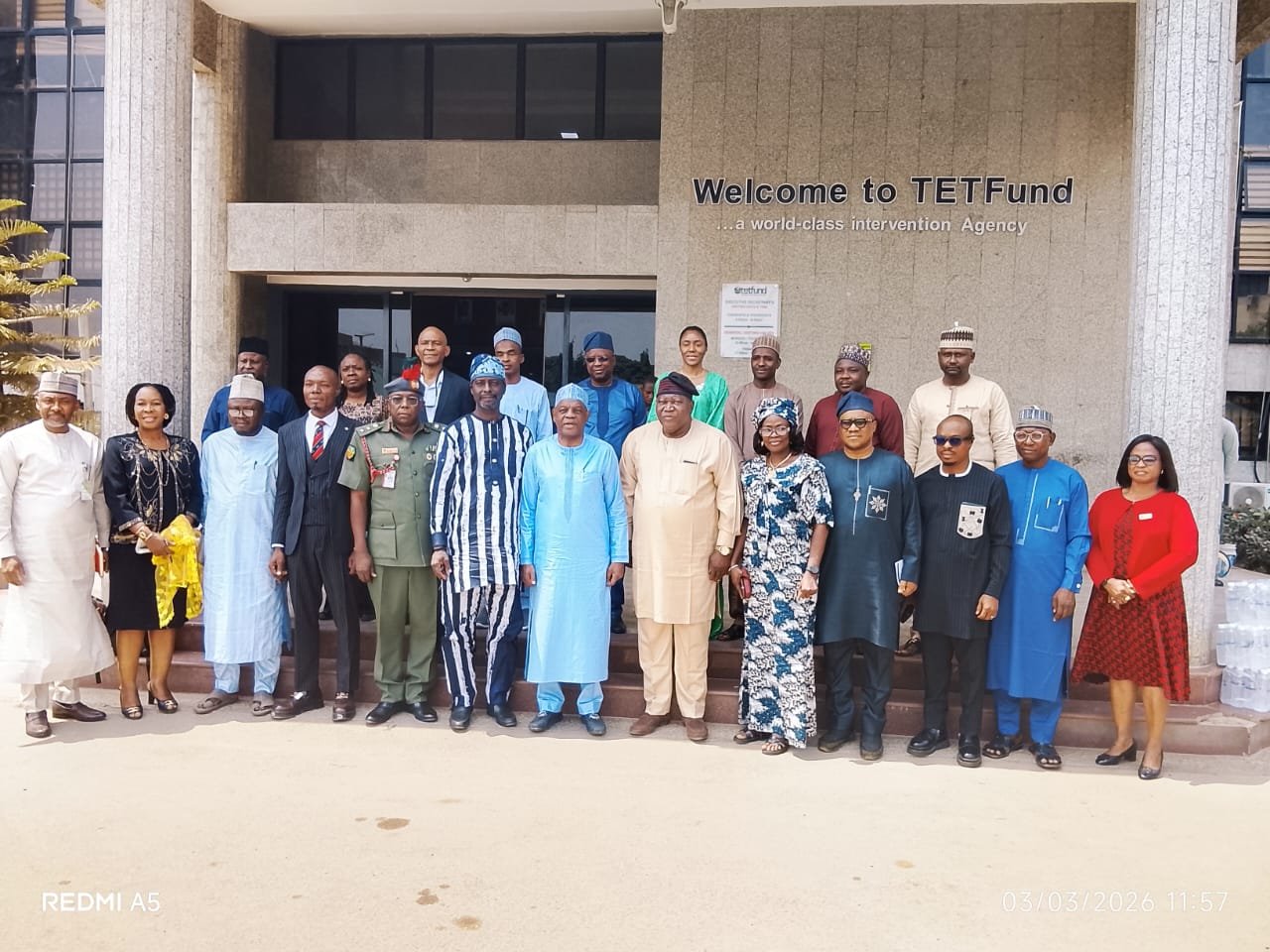
ABUJA, Nigeria – The Tertiary Education Trust Fund announces plans to establish six new Centres of Excellence in Robotics, Coding, Artificial Intelligence, Machine Learning and Cybersecurity across Nigerian public universities, in a move aimed at strengthening national security and boosting global competitiveness.
Once operational, the new facilities will raise the number of TETFund-supported Centres of Excellence nationwide from 30 to 36, expanding Nigeria’s advanced technology research and training capacity.
The announcement comes on Wednesday in Abuja during the inauguration of an advisory committee tasked with overseeing the selection and development of the new centres. Executive Secretary Sonny Echono says the initiative reflects a deliberate national strategy to prepare Nigeria’s youthful population for emerging digital economies.
“We are not only addressing national security concerns,” Echono says. “We are preparing future generations to contribute meaningfully to national development and fill global skills gaps.”
He confirms that presidential approval has been secured to establish at least six additional centres, one in each geopolitical zone, in line with the TETFund Act of 2011. According to Echono, the centres will be hosted exclusively by public universities and equipped with state-of-the-art facilities to drive innovation in cutting-edge technologies.
The advisory committee, chaired by Yakubu Ochefu, is mandated to identify institutions with demonstrable strengths in robotics, coding, artificial intelligence, machine learning and cybersecurity. It will also develop merit-based selection criteria and recommend up to six universities, ensuring balanced regional representation.
Echono directed the committee to complete the first phase of its assignment within 30 days, adding that the panel will continue to guide beneficiary institutions through the establishment and growth of the centres.
Responding, Ochefu pledges that the committee will deliver transparent, capacity-driven recommendations that align with global standards while reflecting Nigeria’s regional diversity.
About the Author


 Korede Abdullah

 Abah Felicity