


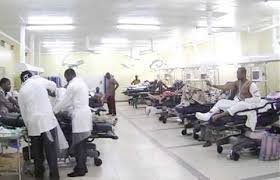
LAGOS, Nigeria – On a cold February morning in Jos, grief moved faster than any official announcement. Phones rang across hospital wards. Resident doctors’ WhatsApp groups fell silent. By noon, the news had spread: another colleague had died in service. Late Dr Salome Oboyi, a senior registrar in obstetrics and gynaecology at Bingham University Teaching Hospital, had succumbed to Lassa fever after treating a patient during routine clinical duty.
She died on Monday, February 2, 2026. For her colleagues, this was not an unpredictable tragedy but a familiar one—an echo of losses that have come to define frontline medical work in Nigeria. Hospitals built to heal, they say, are increasingly places where those who serve are placed in harm’s way. Korede Abdullah, writes.
A Death That Shook the Wards
Dr Oboyi’s passing sent a jolt through Nigeria’s medical community. In teaching hospitals and general wards, doctors paused—not because emergencies had stopped, but because the fear had become personal again. Many had worked alongside her. Others saw in her death a mirror of their own daily risks.
“She did not die seeking applause or recognition,” the National Association of Resident Doctors (NARD) said in a statement titled Loss of a Hero. “She died doing what doctors are trained and sworn to do—preserve life and protect society.”
Colleagues described Oboyi as a tireless maternal health specialist, often the first to respond to emergencies in overstretched wards. As a senior registrar, she mentored younger doctors while managing complicated pregnancies and life-threatening obstetric cases. Her exposure reportedly occurred while attending to a patient later suspected to have Lassa fever—an encounter that underscores the hidden dangers embedded in routine care.
Duty Before Danger
In Nigerian hospitals, infectious diseases rarely announce themselves neatly. Patients arrive with vague symptoms; triage is rushed; laboratories are overburdened. For doctors like Oboyi, duty often comes before diagnosis.
Her final days followed a pattern familiar to many resident doctors: long hours, limited protection, and a professional ethic that prioritises patients even when personal risk is high. That ethic, colleagues say, has become a liability in a system that fails to protect those who uphold it.
Outrage, Not Resignation
Oboyi’s death triggered anger rather than quiet mourning. NARD’s national president, Dr Mohammad Usman Suleiman, described it as “the predictable consequence of a healthcare system that routinely exposes its frontline workers to danger and then mourns them quietly”.
The association warned that occupational infections among doctors have become disturbingly common, yet rarely prompt sustained reform. “When doctors die from the very diseases they are meant to fight, the nation often responds with silence,” the statement said. “This raises a painful question: whose lives do we truly value as a nation?”
Behind hospital walls, colleagues mourned not only a friend but a pattern—one in which families grieve privately while wards return to business as usual.
The Dangers Within Hospital Walls
In an interview with Africa Health Report, NARD’s secretary-general, Dr Shuaibu Ibrahim, said Nigerian doctors increasingly practise under life-threatening conditions shaped by systemic neglect.
“Medical practice in Nigeria today exposes doctors to significant occupational hazards, particularly infectious diseases,” he said. Overcrowded wards, poor ventilation and excessive workloads, he noted, increase vulnerability. “Frontline doctors frequently examine patients without knowing they carry highly infectious illnesses, especially where triage systems are weak or laboratory confirmation is delayed.”
Shortages of personal protective equipment (PPE) persist across facilities, Ibrahim added. “Inconsistent supply chains force doctors to improvise protection,” he said. “Preventable deaths result from delayed laboratory confirmation, underfunding of healthcare infrastructure and workforce shortages that push doctors to manage excessive patient loads.”
The consequences are far-reaching: eroding morale, rising burnout and an accelerating exodus of doctors seeking safer working conditions abroad.
Diagnostic Gaps and A Weak Safety Culture
Consultant pathologist Dr Charles Adeyemo argues that the problem extends beyond equipment. “Many exposures occur before anyone even suspects a viral haemorrhagic fever,” he said. “By the time laboratory confirmation comes, several health workers may have already interacted with the patient without heightened precautions.”
Weak triage culture, he explained, allows infectious patients to pass through multiple departments before isolation begins, exposing doctors, nurses and laboratory staff alike. In such settings, infection control becomes reactive rather than preventive.
Understaffed And Overstretched
Nigeria’s health workforce shortage compounds these risks. With roughly 24,000 actively licensed physicians serving a population of more than 200 million, doctors are stretched thin. Fatigue increases the likelihood of infection-control lapses, while emergency pressure undermines proper PPE use.
“Protective gear alone does not guarantee safety,” Adeyemo said. “In some facilities, available PPE is not properly used because of poor training, exhaustion or the urgency of care.”
Laboratory personnel—often invisible in public debates—face hazards ranging from tuberculosis exposure to needle-stick injuries and unsafe biosafety practices when equipment fails.
When Fear Becomes Routine
For resident doctors, occupational danger has become a constant companion. NARD warns that many continue to work knowing a single exposure could be fatal. Weak reporting mechanisms deepen the crisis: studies suggest up to 90.7 per cent of health workers never formally report occupational injuries.
“Doctors go in anyway driven by duty, compassion and oath,” the association said. “They should not have to pay with their lives.”
NARD has called on federal and state governments to recognise Oboyi’s death as an occupational hazard, compensate her family and strengthen preparedness for infectious disease outbreaks.
Reform or Remembrance
Experts insist that remembrance alone is not enough. Ibrahim outlined urgent steps: sustained PPE supply, mandatory infection-control training, functional isolation units and comprehensive occupational hazard insurance for health workers.
Adeyemo emphasised early detection and accountability. “The quickest way to reduce occupational infections is early diagnosis,” he said. “Functional laboratories with rapid turnaround times will significantly limit unnecessary exposure.”
Both agree that psychological support, safety audits and clear outbreak-response protocols are essential to restoring trust.





Join the conversation