Mirian Gom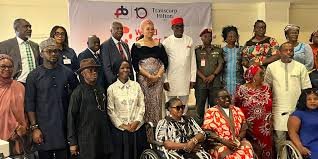
ABUJA, Nigeria – The Federal Government faces renewed pressure to declare cancer a national emergency as rising treatment costs, insecurity and inadequate funding continue to devastate patients across Nigeria.
Chairman of the Senate Committee on Primary Health and Communicable Diseases, Senator Mao Ohuabunwa, issued the call during the World Cancer Day Symposium organised by Project Pink Blue in Abuja, warning that existing government interventions are failing to match the scale of the crisis.
“We need to move beyond routine healthcare responses,” Ohuabunwa says. “Cancer treatment should be treated as a national emergency, especially in conflict-affected regions where patients cannot access screening or care.”
He acknowledges government efforts but insists that budgetary allocations and logistics remain grossly insufficient, particularly for breast cancer patients.
Security challenges, he adds, further worsen outcomes. “Imagine patients in vulnerable areas — how do they move? How do they access treatment? It is simply not possible.”
Echoing these concerns, Imo State First Lady and Chairperson of First Ladies Against Cancer (FLAC), Mrs Chioma Uzodinma, highlights a severe funding gap hampering patient care nationwide.
“Since 2025, we have expanded collaborations with private sector partners, international organisations and governments to strengthen cancer treatment, research and advocacy,” Uzodinma says.
She notes that FLAC’s initiatives include free screenings, grassroots awareness, patient support and policy advocacy in partnership with the Federal Ministry of Health, WHO and civil society organisations.
The symposium places strong emphasis on the intersection between healthcare access and national insecurity, warning that delayed action will continue to cost lives.
About the Author

 Hope Ajayi