
Hidden Chains: Nigeria’s Uneven Battle Against Human Trafficking
 Edino Chubiyo Cornelius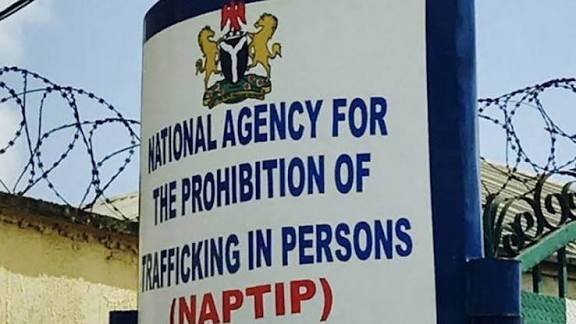
ABUJA, Nigeria – It is a crime that rarely announces itself. There are no sirens, no public scenes, and often no witnesses. Yet across Nigeria, human trafficking continues to strip people of freedom, dignity and future — quietly, steadily and largely out of sight.
Unlike violent crimes that shock communities into action, trafficking thrives in silence. It hides behind promises of work, education and travel. It moves through familiar faces, trusted voices and increasingly, glowing phone screens. And by the time victims realise the truth, escape is often impossible.
Despite years of policy reform and enforcement efforts, trafficking remains one of Nigeria’s most persistent human rights challenges. Those working on the frontlines say the crime is evolving faster than the systems designed to stop it. Edino Cornelius, writes.
A Crime Hidden in Plain Sight
Human trafficking operates in the shadows, but its roots are visible everywhere.
Economic hardship, unemployment and limited access to opportunity create fertile ground for exploitation. Young people searching for a way out of poverty and families desperate for hope are often targeted with offers that appear genuine.
These offers may promise jobs, skills training, schooling or travel abroad. In reality, they frequently lead to forced labour, sexual exploitation or domestic servitude.
What makes prevention harder is familiarity. In many cases, traffickers are not strangers. They may be neighbours, distant relatives or acquaintances. Trust becomes the entry point, and suspicion fades.
Those responding to the crisis say trafficking is not just a crime problem — it is a social failure traffickers know how to exploit.
False Promises and Economic Pressure
Poverty remains one of the strongest drivers of trafficking in Nigeria.
When basic needs go unmet, risky opportunities appear reasonable. Families facing daily financial pressure may overlook warning signs. Young people with limited prospects are more likely to believe promises of a better life elsewhere.
Today, the problem is no longer confined to physical spaces.
Digital platforms have transformed recruitment. Fake job adverts, fraudulent scholarships and online relationships are increasingly used to lure victims. Social media allows traffickers to operate quickly and anonymously, often across borders.
With a single message, a false opportunity can reach thousands.
NAPTIP and the Changing Face of Trafficking
According to Mr. Agbola of the National Agency for the Prohibition of Trafficking in Persons (NAPTIP), traffickers are becoming more strategic and technologically savvy.
He said criminal networks now rely heavily on social media to sell carefully curated narratives of success and prosperity.
“These platforms are being used to present false opportunities and so-called better lives elsewhere,” he explained.
In response, NAPTIP has expanded its public awareness campaigns, focusing on helping people recognise warning signs before they fall victim.
“Awareness is critical,” Agbola said. “Informed communities are less likely to be deceived.”
He added that the agency remains committed to prevention, rescue operations and partnerships with local and international stakeholders, even as traffickers continue to adapt.
Why Prevention Remains Difficult
Despite these efforts, prevention faces serious obstacles.
In many rural and underserved communities, awareness of trafficking risks remains low. At the same time, economic pressures push people toward unsafe decisions. Social safety nets that could offer alternatives are often weak or inaccessible.
Officials involved in enforcement also point to operational challenges. Funding shortages, limited equipment and a lack of specialised personnel restrict how effectively laws can be implemented.
While Nigeria has legal frameworks in place, gaps between policy and practice allow traffickers to operate with relative ease.
The Struggle for Justice
Securing justice for trafficking victims is rarely straightforward.
Cases often span multiple states or countries. Traffickers use false identities, digital communication and informal networks that complicate investigations.
Survivors, already traumatised, may fear retaliation or stigma. Some are reluctant to testify, weakening prosecutions.
Security officials acknowledge progress, but stress that enforcement is an ongoing race against constantly changing tactics.
Trafficking, they say, is not a crime that can be eliminated through arrests alone.
Life After Rescue
For survivors, rescue marks only the beginning.
Many return with deep emotional scars, health challenges and uncertain futures. Reintegration into society can be difficult, especially without stable income or family support.
Shelters and rehabilitation centres provide counselling, medical care and vocational training. Social workers help survivors rebuild confidence and skills.
However, resources are limited. Demand often outpaces capacity. Long-term recovery requires sustained support, not short-term intervention.
Without economic opportunity, survivors remain vulnerable to re-exploitation.
The Role of Communities and Civil Society
Civil society organisations play a crucial role in filling gaps.
Non-governmental groups lead awareness campaigns, assist victims and monitor trafficking trends at the community level. Their presence helps identify early warning signs and supports survivors where government reach is limited.
Cooperation between these groups and security agencies has improved response times and victim support. International partnerships also help address cross-border trafficking routes.
Still, experts agree that communities themselves are central to prevention.
Early signs often emerge locally — sudden travel plans, suspicious recruiters or unexplained wealth. When communities speak up, intervention becomes possible.
An Evolving Threat
Human trafficking networks are becoming more organised, more connected and more technologically aware.
They adapt quickly to enforcement measures, shifting routes and methods to avoid detection. This means the response must evolve too.
Experts argue that lasting progress depends on combining law enforcement with broader social and economic reforms. Job creation, education, digital literacy and social protection are all part of the solution.
Though trafficking often happens out of sight, its impact is long-lasting.
Those involved in the fight say sustained commitment, better coordination and tackling root causes of vulnerability are essential if Nigeria is to weaken the grip of this hidden crime.
About the Author



 Oluwatobi Adu
 Korede Abdullah
 Oluwafunbi Bello