
From Deluge to Reckoning: How Nigeria’s Deadly 2025 Floods Exposed a Climate System Built to Fail
 Oluwafunbi Bello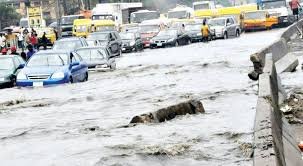
ABUJA, Nigeria – When floodwaters tore through Nigeria in 2025, sweeping away homes, livelihoods and lives, the devastation was swift and unforgiving. By year’s end, at least 228 people were officially recorded dead, more than 30 states were affected, and over 209,000 Nigerians were displaced. In May, the central town of Mokwa witnessed one of the deadliest single flood incidents in recent memory, with over 500 lives lost in a tragedy that still haunts survivors. But beyond the human toll lies a deeper reckoning: Nigeria’s climate crisis is not merely about rising waters — it is about a system that reacts too late, plans too little, and enforces too weakly.
Environmental experts warn that the floods of 2025 did not come as a surprise. They were, instead, the predictable outcome of years of neglected prevention, fragmented policies and chronic underinvestment in climate resilience. Oluwafunbi Bello, writes.
A Crisis Bigger Than Floods
While images of submerged roads and overflowing rivers dominated headlines, climate expert Niyi Emmanuel argues that the floods represent just one dimension of a much broader environmental emergency.
“Nigeria faces six critical climate challenges that undermine development,” Emmanuel said.
He outlined a web of interconnected threats stretching across the country: flooding intensified by “poor drainage infrastructure and weak early warning systems”; drought and erratic rainfall driving “water scarcity and failing crops, worsened by limited climate-smart irrigation”; and land degradation now affecting 43 per cent of Nigeria’s territory, placing food security under severe strain.
Restoration programmes such as the Great Green Wall, he noted, remain “underfunded”, while coastal erosion continues to erode livelihoods.
“Rising seas are destroying Lagos coastal communities, yet no comprehensive defence or relocation plans exist,” Emmanuel warned.
In the oil-rich Niger Delta, environmental degradation persists with minimal accountability.
“Oil spills and industrial waste continue to contaminate water, especially in the Niger Delta, with minimal enforcement of environmental laws,” he said.
Perhaps most troubling, Emmanuel added, is the imbalance in climate financing.
“Only one per cent of climate funding prioritises gender, leaving vulnerable rural women unsupported.”
Warnings Given, Lessons Ignored
Nigeria was not without warnings in 2025. Early alerts were issued by meteorological agencies, and in October, the Federal Ministry of Environment validated a revised National Erosion and Flood Control Policy.
Yet the floods laid bare the limits of policy without execution.
The federal government earmarked ₦6 billion for erosion and flood control projects in the 2025 budget, alongside ₦3 billion per state for flood preparedness. Experts, however, say the funding was both inadequate and poorly coordinated.
At the state and community levels, early warning systems failed to save lives.
Forecasts were often not communicated effectively, particularly to rural populations, where language barriers and limited access to information proved fatal.
Director of Erosion, Flood and Coastal Zone Management, Usman Bokani, acknowledged the scale of the challenge.
“Challenges posed by erosion and flooding have become more intense due to combined pressures of climate change, deforestation, and poor land use practices,” he said, calling for “a comprehensive and well-coordinated national policy framework.”
For Emmanuel, the core problem is misplaced priorities.
“The government should focus on prevention and not just response alone by clearing drainage systems regularly, restore forests and wetlands, plan roads, houses and farms with flood risks in mind,” he said.
He added that enforcement remains critical.
“Enforce building laws that stop building in flood-prone areas and relocating high-risk communities.”
Floods Meet Hunger: A Looming Food Crisis
Beyond the immediate destruction, the 2025 floods struck at the heart of Nigeria’s food system. More than 23,000 farmlands were damaged, deepening an already fragile food security situation.
In northern Nigeria, drought and erratic rainfall had already reduced yields. In flood-hit regions, entire planting seasons were lost.
To reverse this trend, Emmanuel insists agriculture must be redesigned for a changing climate.
“Support climate-smart agriculture—distribute drought-resistant seeds and subsidise irrigation systems,” he urged.
Nigeria already has access to proven solutions. Flood-tolerant rice varieties such as FARO 44 (Ex-China) and FARO 57 can survive submerged conditions for up to two weeks. SAMMAZ maize varieties, bred for both drought and Striga resistance, offer resilience against climate stress, while WITA and NERICA rice varieties combine flood tolerance with disease resistance.
Experts stress that seed distribution must be paired with farmer education, irrigation support and water-management training if productivity is to recover.
Disease, Displacement and the Human Cost
The floods also triggered a public health emergency. Cholera outbreaks were recorded in 34 states, placing 80,000 children at high risk. Dengue fever emerged in Edo State, while malaria, typhoid and diarrhoeal diseases surged in overcrowded displacement camps.
More than 71,400 Nigerians remain displaced, many living in conditions that expose the long-term costs of delayed climate action.
Permanent Secretary of the Federal Ministry of Environment, Mahmud Kambari, has described the situation in stark terms.
“Environmental sustainability is not an option but an imperative for survival and national development,” he said, calling for “full implementation, monitoring, and periodic review” of flood control policies.
What Must Change in 2026
Looking ahead, Emmanuel outlined eight priority actions that could shift Nigeria from reaction to resilience in 2026:
Build resilient infrastructure — “Upgrade drainage, construct flood barriers, and restore wetlands.”
Support climate-smart agriculture — “Distribute drought-resistant seeds and subsidise irrigation systems.”
Accelerate land restoration — “Expand tree planting and Great Green Wall initiatives.”
Strengthen early warning systems — “Improve meteorological forecasting and community alerts.”
Prioritise climate budgeting — “Allocate funds strategically with gender considerations.”
Protect coastal areas — “Restore mangroves and enforce buffer zones.”
Enforce environmental laws — “Hold polluters accountable and strengthen regulatory agencies.”
Mobilise climate finance — “Leverage international funds and build partnerships.”
“These actions would directly advance multiple Sustainable Development Goals — 1, 2, 6, 13 and 15 — by protecting livelihoods, improving food and water security, and building national resilience,” Emmanuel said.
A Choice Nigeria Cannot Delay
The floods of 2025 were not an isolated disaster; they were a warning written in water and loss. From Mokwa’s mass graves to the crowded displacement camps, the cost of inaction is already visible.
Nigeria now faces a defining choice: continue a cycle of emergency relief and reconstruction, or finally invest in prevention, enforcement and long-term planning.
The science is clear. The solutions exist. What remains uncertain is whether political will rise faster than the next flood.
As 2026 approaches, Nigeria’s climate future may hinge on whether its leaders treat 2025 not as a tragic anomaly — but as the last warning they can afford to ignore.
About the Author


 Mirian Gom
 Korede Abdullah

 Oluwatobi Adu