
Nigeria’s Education Paradox: Rising Budgets, Insecurity and a Generation at Risk
 Otamere Gladness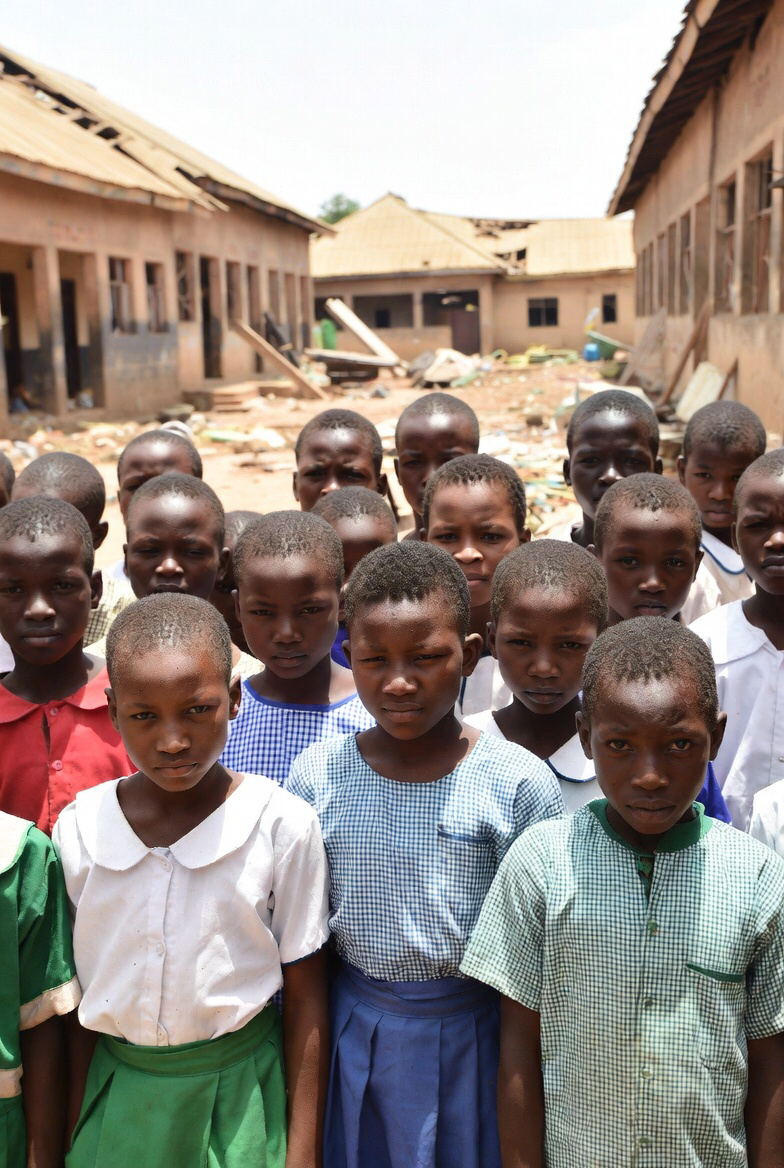
Abuja, Nigeria – Nigeria entered 2025 promising a reset for its struggling education sector. Instead, the year exposed a familiar paradox: higher budget figures, ambitious reforms and renewed political rhetoric, alongside persistent insecurity, policy reversals and one of the world’s largest populations of out-of-school children.
Africa’s most populous nation is home to an estimated 18–20 million children not enrolled in school, according to government and UN-linked data. As Nigeria seeks to harness its demographic dividend, education has become a defining test of governance capacity, social stability and long-term economic competitiveness. Otamere Gladness, writes.
Budgets That Rise, But Not Enough
Despite modest increases, Nigeria’s education spending remains far below global benchmarks. UNESCO recommends allocating 26 per cent of national budgets to education, while the World Bank advises 15–20 per cent for developing economies.
Nigeria’s federal education allocation hovered between 5 and 8 per cent from 2019 to 2025, peaking at 7.9 per cent in 2024 and dropping slightly to 7.3 per cent in 2025. While the proposed ₦3.52 trillion ($2.3bn) allocation for 2026 marks a sharp nominal increase, analysts note that inflation, insecurity and population growth significantly dilute its impact.
“Budget size alone is not the issue,” said education analysts in Abuja. “The real challenge is implementation, accountability and outcomes.”
Nigeria’s Education Paradox: Rising Budgets, Insecurity and a Generation at Risk
States Move at Different Speeds
Some state governments signalled a break from the past in their 2026 proposals. Anambra State allocated nearly 47 per cent of its budget to education, the highest nationwide, followed by Enugu (32 per cent), Kano (30 per cent) and Jigawa (26 per cent)—meeting UNESCO’s benchmark.
Other states, including Kaduna, Abia and Taraba, also crossed the 20 per cent mark.
Yet sharp disparities remain. Oil-rich Akwa Ibom allocated just 2.27 per cent, while Lagos, Nigeria’s commercial hub, earmarked 5.87
Several states with poor learning outcomes, including Zamfara, remained below 10 per cent.
The uneven commitment underscores Nigeria’s decentralised education governance, where state priorities heavily shape access and quality.
Insecurity Keeps Classrooms Closed
Security concerns continued to define education outcomes in 2025.
The Nigeria Union of Teachers (NUT) threatened nationwide industrial action, citing years of mass kidnappings targeting students and educators. Incidents ranging from the Chibok abductions in 2014 to the Kuriga kidnapping in Kaduna State in 2024 have reshaped schooling in large parts of northern Nigeria.
In conflict-affected states such as Borno, Yobe and Zamfara, schools remain closed or under-attended. Teachers flee high-risk areas, and parents—especially girls—often keep children at home.
Girls account for nearly 60 per cent of out-of-school children in conflict zones, according to education officials and aid agencies.
A Testing System Under Scrutiny
Public confidence in national examinations was shaken in May, when JAMB, Nigeria’s tertiary admissions body, admitted a technical failure affected 157 exam centres during the 2025 Unified Tertiary Matriculation Examination (UTME).
Registrar Prof. Ishaq Oloyede apologised publicly and ordered a retake for affected candidates.
“We are humans. We are not perfect,” Oloyede said, calling the incident “a significant setback.”
While the retake eased immediate pressure, parents and civil society groups raised concerns about digital infrastructure, transparency and the high stakes attached to a single national test.
Policy Reversals and Legal Pushback
Education policy inconsistency resurfaced with the Federal Government’s decision to set 16 years as the minimum age for tertiary admission, reversing a previous 18-year benchmark.
The move sparked debate and legal challenge. A Delta State High Court ruling held that JAMB lacked the authority to impose age limits, prompting the board to seek a stay of execution pending appeal.
The episode highlighted coordination gaps between ministries, regulators and the judiciary—an issue international development partners say weakens reform credibility.
Curriculum Reform: A Bright Spot
In August, Nigeria unveiled a revised national curriculum aimed at reducing subject overload and aligning learning with labour-market needs.
The reform cuts the number of subjects across primary, junior and senior secondary levels, with greater emphasis on foundational skills, technical education and depth of learning.
According to Minister of State for Education, Prof. Suwaiba Said Ahmad, the review focused on quality rather than quantity.
“The process was not just about reducing subjects, but improving content to allow for deeper learning,” she said.
Education experts cautiously welcomed the reform but warned that teacher training, funding and monitoring would determine its success.
Labour Tensions Persist
University education faced renewed disruption in October, when the Academic Staff Union of Universities (ASUU) embarked on a two-week warning strike over wages and conditions.
A December agreement granted a 40 per cent salary increase, temporarily averting further action. However, frequent strikes continue to undermine academic calendars, research output and Nigeria’s standing in global higher-education rankings.
Private Capital Steps In
As public systems faltered, private intervention gained prominence. Business magnate Aliko Dangote announced a ₦100 billion annual education fund, projected to support 1.3 million students nationwide over ten years.
The programme targets university, polytechnic and technical students, complementing government efforts to expand vocational education.
While widely praised, analysts cautioned that philanthropy cannot substitute for sustained public investment.
Expert View: “The Programme Has Been Politicised”
Agbonze G., an official with the Edo State Ministry of Education, said federal social interventions have failed to translate into nationwide impact.
“The school feeding programme has been politicised,” she said. “The federal government provides the money, but the purpose is not always fulfilled.”
She added that poverty forces many children into farming or street trading during school hours, making education an unaffordable option without reliable incentives.
What 2026 Must Deliver
Policy experts say 2026 will be decisive. Priorities include:
Raising education spending closer to 15 per cent nationally
Securing schools in high-risk regions
Rebuilding damaged infrastructure
Ensuring transparent implementation of social programmes
Strengthening federal–state accountability
Stabilising university calendars
A Defining Test
Nigeria’s education crisis is no longer a domestic issue alone. It has implications for regional security, migration, labour markets and Africa’s economic future.
Whether Nigeria can turn rising budgets into real classrooms, safe learning and measurable outcomes remains one of the most consequential policy questions facing Africa’s largest economy.
About the Author

 Mirian Gom

 Korede Abdullah
 Oluwatobi Adu