
Nigeria’s School Bullying Crisis: Why Children Still Fear the Classroom
 Oluwatobi Adu
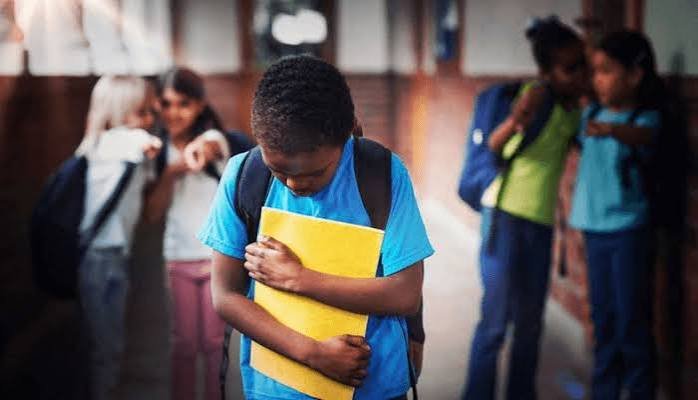
ABUJA, Nigeria – A school should be a place where children learn, build friendships and develop confidence, yet for many Nigerian pupils, the classroom and hostel have become places of intimidation, violence and fear. From disturbing videos of students assaulting their juniors to allegations of bullying-related abuse and a child’s unexplained death, Oluwatobi Adu examines why Nigeria’s anti-bullying policies are yet to guarantee safer schools and what parents, teachers and government must do to protect children.
Viral Assaults and a Child’s Death Raise School Safety Concerns
In March 2026, two leaked videos from Igbinedion Education Centre in Benin City, Edo State, renewed concerns about bullying in Nigerian schools. One showed two male students kicking and flogging a junior pupil with a belt, while another showed more than five senior students assaulting juniors in a secluded room. The school expelled the students involved and arranged medical care for the victim.
One parent, Tim Asoro, issued a public apology, saying: “We are ashamed that our son took part in an act that caused another student pain and fear.”
The Edo State Government ordered an investigation and directed the police to arrest those involved. Weeks later, another school-related incident generated outrage following the death of 11-year-old Ufokobong Edwin Godwin, a pupil of Federal Government College (FGC), Ikot Ekpene, Akwa Ibom State.
Ufokobong died at home on Easter Sunday, April 5, 2026, amid allegations that a senior student assaulted him after he refused to share his provisions. However, the circumstances surrounding his death remained disputed.
The school principal, Ezeogu Jude, said he was informed that a senior student hit the boy but that he recovered after receiving treatment at the school clinic. He added that the school had commenced an internal inquiry. The family subsequently urged the public to stop circulating unverified accounts while investigations continued.
Although the allegations had not been conclusively established, the incident raised questions about how schools monitor pupils’ welfare, respond to reported assaults and communicate with parents.
A Mother’s Account: Scars, Fear and Failed Intervention
For Mrs Oluwamuyide, the consequences of bullying became apparent after her child entered Junior Secondary School 1 at a public school in Ibadan, Oyo State. She said the bullying began in the first term and continued into the second. The child frequently complained about how fellow pupils treated him.
She also noticed scars on his body and changes in his behaviour. He became fearful, struggled to express himself and frequently cried when it was time to go to school. When she reported the matter, Oluwamuyide alleged that the teacher handling the complaint sided with the other pupil and collected money from the child’s parent to settle the dispute. “Instead of the teacher settling the issue amicably by punishing the bully, she rather took sides,” she said.
She urged school administrators to investigate complaints impartially, protect pupils who report abuse and ensure that appropriate disciplinary measures are applied.
How Widespread Is Bullying in Nigerian Schools?
UNESCO estimates that one in three learners worldwide experiences bullying at school at least once a month. It also reports that about 246 million children and adolescents experience school-related violence and bullying annually.
In Nigeria, figures cited in the Federal Ministry of Education’s 2025 National Policy on Anti-Bullying in Nigerian Schools suggest that between 70 and 85 per cent of students experience bullying. The Minister of Women Affairs has separately cited 51.9 per cent of adolescent students reporting that they had been bullied, with classrooms accounting for 75 per cent of reported incidents.
A 2026 study involving 404 secondary school students in Bayelsa State found that 85.6 per cent had experienced bullying. Physical bullying was reported by 77.7 per cent, while 76.2 per cent experienced verbal bullying. Bullying includes physical attacks, insults, threats, body-shaming, social exclusion and cyberbullying. Its consequences can include anxiety, depression, isolation and poor academic performance.
Some children remain silent because they fear retaliation or embarrassment.
Teachers Highlight Warning Signs and Reporting Gaps
Ebong, a teacher at Junior Secondary School, Jabi, Abuja, said withdrawal from other pupils could indicate that a child was experiencing bullying. “The children withdraw. They would rather prefer to stay all by themselves,” he told Africa Health Report.
He stressed that schools must reassure pupils that reporting abuse would not expose them to further intimidation. “They should be told that they are protected. The school has their back, the authority has their back,” he said.
He explained that disciplinary measures could include suspension, expulsion or other corrective actions, but added that schools should also address the behaviour of pupils responsible for bullying. However, Ebong could not confirm whether his school was implementing the Federal Government’s 2025 anti-bullying policy.
Another teacher, Orisha Waimi Olomu, of Ground Record, a private school in Gwarinpa, Abuja, recommended confidential reporting channels for pupils who fear intimidation. “The only way to do that is to tell them to report secretly,” he said.
He also emphasised emotional support to help affected children regain confidence. Elijah Jonathan, a parent and music teacher at Shelly’s Treasures International School, urged teachers and parents to watch for children who become unusually silent, lose interest in schoolwork or withdraw from activities. He advocated appropriate disciplinary action alongside efforts to encourage affected pupils to participate in classroom and extracurricular activities.
Child Protection Expert: Policy Implementation Remains the Problem
Adeola Adeyemi, a child-protection expert and founder of The Adeola Adeyemi Foundation, said bullying could have lasting psychological, emotional and educational consequences, including anxiety, depression, trauma and social isolation.
She identified physical, verbal, relational and cyberbullying as major forms of abuse, noting that peer pressure and the desire for popularity could encourage the behaviour. Adeyemi pointed to the Child Rights Act 2003, the National Policy on Safety, Security and Violence-Free Schools 2021, and the National Policy on Anti-Bullying in Nigerian Schools and Implementation Guidelines 2025.
However, she argued that the challenge was not the absence of policies but their implementation. “The problem is not the absence of policy but the gap between policy and implementation. A policy alone does not protect a child,” she said.
She questioned whether teachers were adequately trained, pupils knew how to report incidents and school authorities consistently investigated complaints. Adeyemi recommended designated child-protection officers, confidential reporting channels, regular awareness programmes and training for teachers on identifying and responding to bullying.
She also urged schools to monitor areas outside classroom supervision, including toilets, playgrounds, corridors, buses, dining halls and hostels.
On disciplinary action, she advocated proportionate sanctions combined with counselling, parental involvement and behavioural interventions. “Bullying must have proportionate consequences, but punishment alone is not enough,” she said. She further called for trained counsellors, professional support for affected children and follow-up after reported incidents to ensure their safety.
Teachers’ Union Acknowledges Challenges
The Nigeria Union of Teachers (NUT) says teachers, school administrators and guidance and counselling units all have responsibilities in preventing bullying.
The Treasurer of the NUT, FCT Wing, Comrade Mamud Ameh, told Africa Health Report that guidance and counselling units should sensitise pupils, identify bullying and encourage affected children to report incidents. He expressed support for the Federal Government’s 2025 anti-bullying policy but acknowledged that managing pupils’ behaviour remained challenging.
He urged teachers to promote kindness and empathy while ensuring that schools take appropriate disciplinary action against offenders.
Beyond Policies: Making Nigerian Schools Safer
Nigeria’s 2025 anti-bullying policy provides a framework, but its effectiveness depends on consistent implementation.
The incidents at Igbinedion Education Centre, allegations surrounding Ufokobong’s death and Oluwamuyide’s account expose the need for stronger safeguarding systems and accountability. Schools must establish confidential reporting channels, appoint safeguarding personnel, train teachers and investigate complaints impartially. They must also protect pupils from retaliation and provide counselling where necessary.
Parents should be involved in addressing complaints, while serious allegations of assault or abuse must be referred to relevant authorities. Government agencies responsible for education and child protection must strengthen monitoring and ensure public and private schools comply with national safeguarding standards.
Ultimately, a safe school is not one that claims it has no bullying cases. It is one where children can report abuse without fear, complaints are investigated, victims receive support and perpetrators are held accountable.
About the Author


 Vincent Ndu

 Mirian Gom

 Hope Ajayi