
 Korede Abdullah
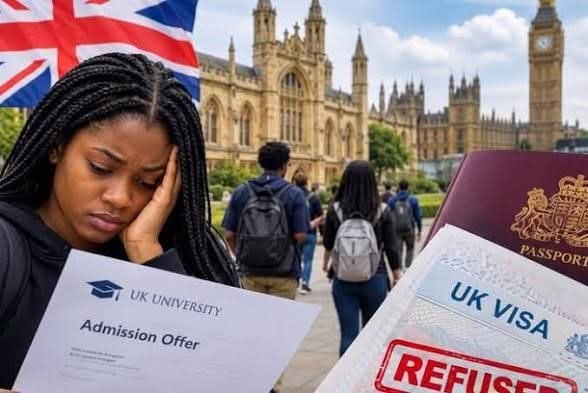
LAGOS, Nigeria – The United Kingdom has deemed 84 per cent of Nigerian students invited for study visa credibility interviews non-credible, highlighting increased scrutiny of applications from Nigerians seeking admission to British universities.
Figures from a UK Visas and Immigration (UKVI) study sector briefing paper, obtained by international education publication The PIE News, show that 9,043 of the 11,415 prospective international students interviewed between May and October 2026 failed to satisfy credibility assessments.
Nigeria recorded the third-highest rate of applicants deemed non-credible among the nationalities examined. Nepal topped the list at 92 per cent, followed by India at 89 per cent. Bangladesh and Sri Lanka each recorded 79 per cent, while Pakistan recorded 73 per cent. The findings are significant for Nigeria, which remains one of the leading African countries sending students to the UK.
Home Office immigration statistics show that Nigerian nationals received 30,204 sponsored study visa grants as main applicants in the year ending December 2025. This represented a 59 per cent increase compared with the previous year. The figure covers successful visa grants to main applicants and excludes dependents. It does not represent the total number of applications submitted.
The UKVI briefing also revealed a sharp increase in the proportion of Nigerian student visa applicants invited for credibility interviews. The rate rose from seven per cent in 2025 to 21 per cent in 2026, indicating tighter scrutiny of applications from Nigeria.
Further Home Office statistics showed that Nigeria remained the third-largest nationality receiving sponsored study visas in the year ending June 2026. Nigerian students secured 26,060 study visa grants during the period, accounting for seven per cent of all grants issued globally.
According to the UKVI briefing, some applicants struggled to demonstrate adequate knowledge of their chosen universities, academic programmes and how their proposed studies aligned with their future career plans. Other concerns included limited understanding of chosen courses, questions about English-language proficiency and doubts over the credibility of applicants’ financial arrangements.
The briefing identified inadequate research into universities and academic programmes as a recurring reason for questioning applicants’ intentions to study in the UK. Despite the increased scrutiny, Oliver Rae, Head of Work, Study, Family and Ukraine Services at the UK Home Office, reportedly said the stricter assessment process was not designed to limit international student numbers. “There is no cap on the number of students that we want to see coming to the UK, but very much a focus on genuine students,” Rae said.
However, the 84 per cent figure does not represent the rejection rate for all Nigerian student visa applications. It applies specifically to Nigerian applicants who underwent credibility interviews between May and October 2026. The findings underscore the importance of thorough preparation for Nigerian students seeking UK study visas. Applicants must demonstrate a clear understanding of their chosen institutions, courses and career objectives, alongside credible financial documentation.
About the Author


 Mirian Gom

 Oluwatobi Adu