 Hope Ajayi
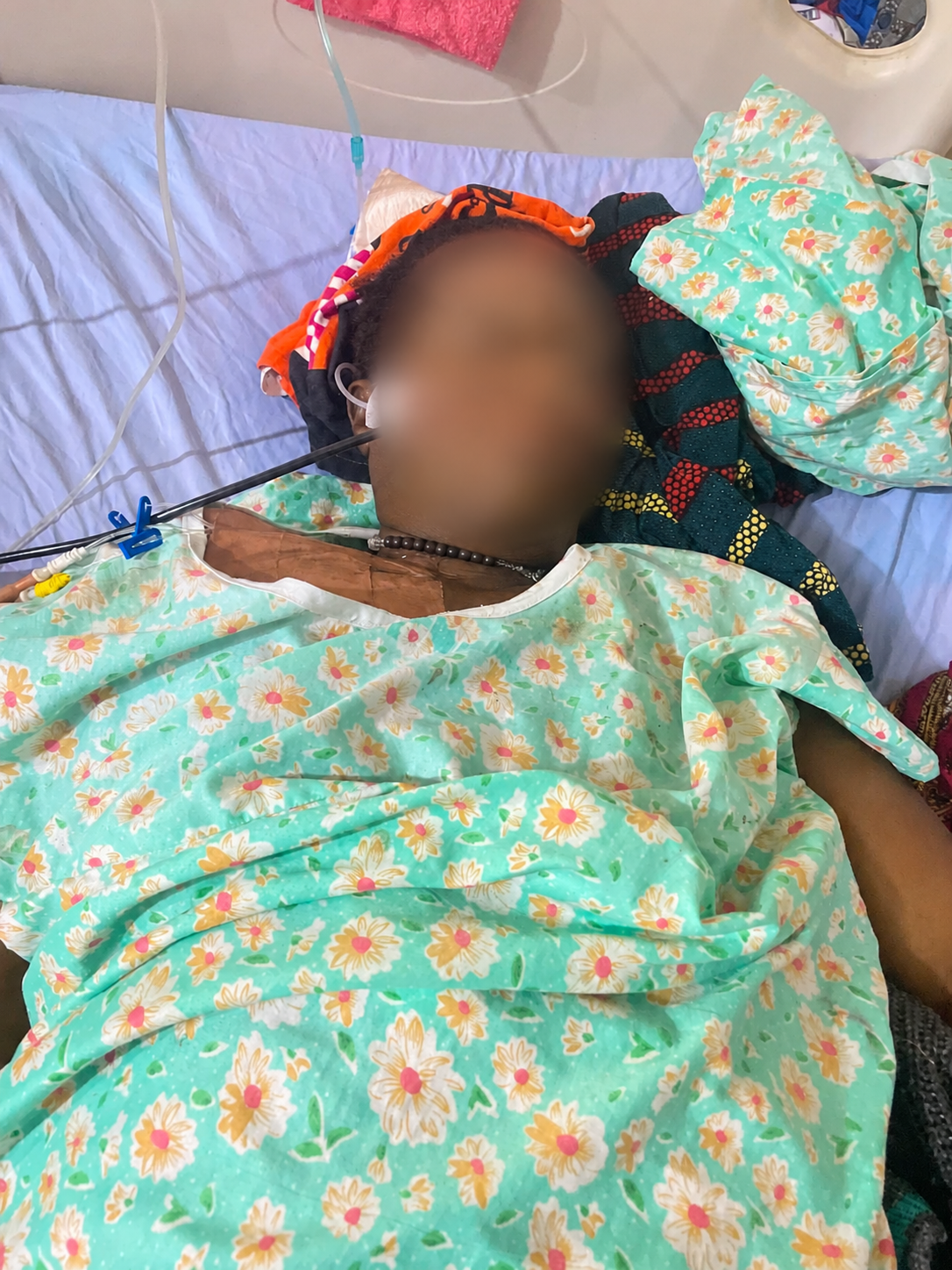
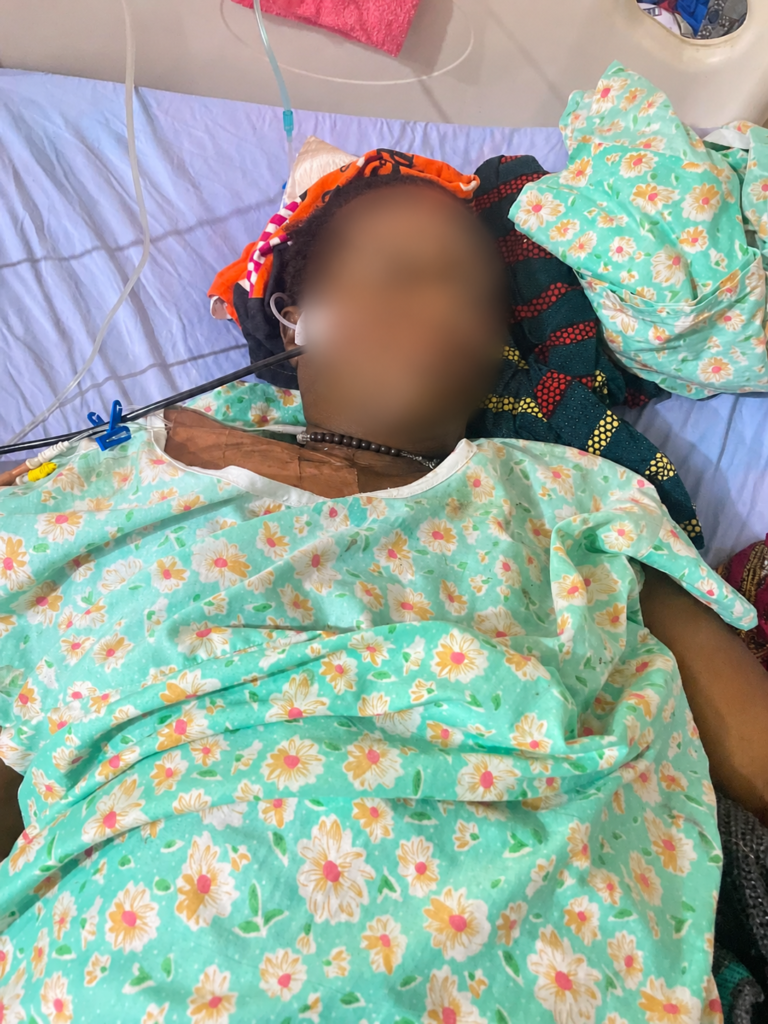
Mrs Angela Nzurumike lies critically ill in a hospital bed before her death during the AHR 's report. (Photo credit: Esther, her daughter)
LAGOS, Nigeria – Esther watched her mother’s health deteriorate over weeks as her family struggled to raise ₦5 million for a medical procedure, sold personal belongings to keep treatment going and faced a hospital strike that left them with few affordable alternatives. In this report, Hope Ajayi examines how financial hardship, gaps in health insurance and disruptions to hospital services can compound the struggle for critical care in Nigeria, leaving families to confront painful decisions when they can least afford them.
A Daughter’s Final Moments With Her Mother
On October 7, Esther experienced a moment she would hold on to long after her mother’s death. Her mother, Mrs. Angela Nzurumike, 65, who was critically ill and struggling to communicate, briefly managed to call Esther and her brother by name.
By about 9am the following morning, October 8, she was dead. For nearly two months, the family had struggled to secure treatment for Mrs. Nzurumike, who Esther said had been diagnosed with stage-four pancreatic cancer and a blockage affecting the flow of bile.
She was receiving treatment at the Lagos State University Teaching Hospital (LASUTH), where the family struggled to pay for investigations, medicines and other aspects of her care.
Then came another setback. Around the end of September, a strike at the hospital disrupted the care her mother was receiving, according to Esther. Although patients remained admitted and the hospital was not completely shut down, she said staff were not attending to patients during the industrial action.
The family could not afford to transfer her mother to a private hospital. Looking back on the experience, Esther summed up what the struggle had taught her. “Wealth is health,” she said.
But her family’s ordeal raises a difficult question: what happens when doctors recommend a procedure that a patient’s relatives cannot afford?
A ₦5 Million Procedure the Family Could Not Afford
Esther said her mother’s illness began with abdominal pain, yellowing of the eyes and difficulty eating. She often felt full quickly and struggled to finish normal meals.
The family initially tried medication obtained from a pharmacy, and her condition appeared to improve temporarily. That improvement did not last. According to Esther, her mother’s symptoms worsened and she began vomiting blood, prompting the family to seek hospital care.
Further investigations, including an MRI scan, reportedly revealed advanced pancreatic cancer and a blockage requiring medical intervention. The family was told that a procedure was needed to address the obstruction. The estimated cost, however, was beyond their means.
Esther said they were asked to raise ₦5 million for the procedure but struggled to raise even half that amount. The bills went beyond the proposed intervention. The family also had to pay for hospital admission, diagnostic tests, medicines, injections, intravenous fluids, blood products, oxygen and other supportive care.
Without health insurance, they relied on personal funds and contributions from relatives, friends and well-wishers. The family had reached a hospital and received medical advice, but paying for the recommended procedure remained a major obstacle.
Selling Belongings to Keep Treatment Going
As the bills mounted, Esther began selling personal belongings to finance her mother’s care. Among the items she sold was her laptop. She also temporarily stopped working to care for her mother after her employer reportedly granted her one month’s leave.
The family sought help from relatives, friends, their church community and members of her mother’s society. Some contributed money, while others visited the hospital, prayed or offered encouragement. Esther also said she contacted celebrities in the hope of securing financial assistance but received no replies.
An organisation later visited the hospital and helped purchase some medicines, injections and intravenous fluids from the hospital pharmacy. The assistance provided some relief but did not cover the family’s overall expenses. Despite these efforts, the family could not raise enough money for the proposed procedure.
The sacrifices illustrate how a serious illness can become a financial crisis for households without adequate savings or insurance. Money intended for food, rent, transport and other necessities may be diverted to medical bills, yet the amount raised may still fall short.
For Esther, selling her belongings and stepping away from work were attempts to keep treatment going. Neither could resolve the family’s financial shortfall. Then the hospital strike added another layer of uncertainty.
When a Hospital Strike Narrows the Options
The industrial action at LASUTH coincided with the family’s struggle to pay for care, according to Esther. She said patients remained admitted during the strike, but staff were not attending to them. With her mother critically ill, the family faced uncertainty over the care available at the hospital.
Moving to a private facility was not financially possible. “Had we had the money, we would have taken her to a private hospital during the strike,” Esther said.
Her account highlights the difficult choices facing patients who depend on public hospitals. When services are disrupted, seeking alternatives may require money that already stretched families do not have.
Patients with sufficient resources may be better positioned to explore private facilities or other options. Those without the means can face fewer choices, particularly when treatment is urgent, specialised or expensive.
However, Esther’s account does not establish that the strike caused her mother’s death or that a transfer to another hospital would have changed the outcome. Mrs Nzurumike had advanced pancreatic cancer, and determining the factors surrounding her death would require medical evidence and access to her clinical records.
What the account establishes is that the family faced several pressures at once: a serious illness, an expensive proposed procedure, mounting treatment costs and disruption to hospital services. The medical complications associated with her mother’s diagnosis also made the situation more difficult.
The Medical Stakes of Advanced Pancreatic Cancer
Nurse Eze Madeleine Chimezie, a nurse at Ashmed Specialist Hospital in Abuja, explained that advanced pancreatic cancer can present complex treatment challenges, particularly when the disease causes complications such as bile duct obstruction.
The pancreas plays important roles in digestion and blood sugar regulation. Cancer affecting the organ can be difficult to detect early because its symptoms may initially be vague or resemble those of other conditions. A bile duct obstruction prevents bile from draining normally from the liver. It can cause jaundice, which appears as yellowing of the skin and eyes, and may be associated with infection and other complications.
Patients with advanced pancreatic cancer may also experience abdominal pain, nausea, vomiting, poor appetite, weight loss and severe weakness. These symptoms can make it difficult to eat adequately and maintain strength.
Chimezie said treatment depends on the extent of the disease, the patient’s overall condition and the complications present.
In some cases, a procedure to restore bile drainage may relieve symptoms or address complications. Other patients may require additional treatment and supportive care. The appropriate intervention, its urgency and its likely benefits depend on individual clinical circumstances.
Financial barriers can complicate access to these interventions when families struggle to pay for investigations, medicines, procedures and follow-up care.
Although delays can affect treatment, their consequences vary according to the patient’s condition and the care required. The available account does not establish how the family’s financial difficulties or the reported strike affected Mrs. Nzurumike’s clinical outcome. The wider concern is that families dealing with serious illness may have to search for money while also navigating complex medical decisions.
The Hidden Cost of Paying for Healthcare
Mrs. Nzurumike’s experience illustrates the financial burden that serious illness can place on households required to pay for much of their care themselves.
Expenses may include consultations, diagnostic tests, medicines, hospital admission, procedures and continued monitoring. Some patients also require blood products, oxygen, specialised equipment and other supportive interventions.
For families without adequate savings or insurance, prolonged treatment or a procedure costing millions of naira can quickly become unaffordable. They may turn to relatives, religious communities, charitable organisations and public appeals. While such support can be valuable, it is not guaranteed and may not arrive in time to meet a patient’s needs.
The central issue is therefore not only whether families can raise money, but whether reliable systems exist to help patients who cannot afford necessary care upfront.
Chimezie identified health insurance and government-supported programmes as potential ways to reduce out-of-pocket expenses, noting that the assistance available depends on the scheme and treatment required.
Where available, hospital payment arrangements and support from non-governmental organisations, religious groups and community networks may also help.
However, patients and their relatives need clear information about eligibility, coverage and how to access assistance, particularly during emergencies. For a family trying to raise millions of naira, knowing where to seek help—and whether that help can arrive in time—can be critical.
Why Health Insurance Must Offer Meaningful Protection
Mrs. Nzurumike was not enrolled in a health insurance scheme, according to Esther. Her family therefore relied largely on personal resources and contributions from others to meet her medical expenses.
Health insurance does not necessarily cover every medicine, treatment or procedure. Coverage varies between schemes. However, appropriate insurance can help eligible patients manage covered healthcare costs and reduce direct payments.
Nigeria’s efforts to expand health insurance and financial protection need to be assessed beyond enrolment figures. The services covered, affordability of contributions, ease of accessing benefits and availability of care all influence how much protection patients receive. For people with serious illnesses, gaps in coverage can become particularly consequential when they need costly investigations or specialised interventions.
Government-supported assistance for vulnerable patients, transparent hospital billing and clear information about insurance benefits could help families understand their options before costs become unmanageable. Hospitals and relevant authorities also need accessible procedures for identifying patients facing severe financial hardship and directing them to available support.
These measures would not remove the clinical challenges of advanced cancer. They could, however, reduce the additional burden of uncertainty over how to pay for treatment.
Who Protects Patients During Hospital Strikes?
The reported industrial action at LASUTH raises another question: how can hospitals protect critically ill patients when health workers embark on strikes?
Industrial disputes in the health sector can arise from concerns over pay, working conditions, staffing, welfare and the implementation of agreements. While these disputes require attention, patients who depend on hospital services can become vulnerable when essential care is disrupted.
The impact depends on the services affected, the duration of the disruption, patients’ conditions and the arrangements made to sustain critical care.
Esther said her mother remained admitted during the reported strike, but staff were not attending to patients. A fuller assessment would require confirmation of the strike’s scope, the services affected and the hospital’s arrangements for patients requiring urgent care.
Clear communication from hospitals and health authorities can help families understand which services remain available, how emergencies are handled and where alternative care can be sought. Effective referral pathways, emergency arrangements and procedures for transferring patients who need unavailable services can also reduce uncertainty during disruptions.
LASUTH and the relevant authorities should have an opportunity to respond to questions about the reported strike and the care available to critically ill patients during that period. Maintaining essential services does not resolve the underlying causes of industrial disputes. It recognises that patients with serious illnesses cannot always wait for those disputes to end.
Beyond One Family’s Loss
For Esther, the loss of her mother followed weeks of trying to secure the care she believed her mother needed. The family sold belongings, sought help from relatives and community members, and accepted assistance where it was available. Yet they could not raise enough money for the proposed procedure.
The reported strike further narrowed their options because they could not afford to transfer her mother to a private hospital. “Wealth is health,” Esther said, summing up what the experience had come to mean to her.
Her words reflect the belief that financial resources could have given the family more choices. They also capture a wider concern about access to healthcare: a patient’s options may depend not only on medical need but also on whether the family can afford the recommended intervention. Mrs. Nzurumike’s death cannot, on the available evidence, be attributed to financial hardship or the reported industrial action. Establishing whether either affected her clinical outcome would require medical evidence and a clearer account of the care provided.
But her family’s experience raises questions that extend beyond one hospital or diagnosis.
What financial assistance is available when patients cannot afford costly procedures? Does health insurance provide meaningful protection against the cost of serious illness? What arrangements ensure that critically ill patients continue to receive essential care during industrial disputes? And how can hospitals communicate treatment costs and available alternatives to families facing urgent decisions?
These questions require answers from health authorities, hospital management, insurers and policymakers—not only from families already struggling to pay.
Access to healthcare involves more than reaching a hospital. It also requires the means to pursue appropriate treatment, reliable information about available options and continuity of essential services.
A family’s ability to pay should not be the only factor determining whether it can explore the care a patient needs. Strengthening financial protection, improving access to assistance and safeguarding essential hospital services could help prevent families already facing the fear of serious illness from carrying an additional burden they cannot afford.
About the Author


 Korede Abdullah