 Korede Abdullah
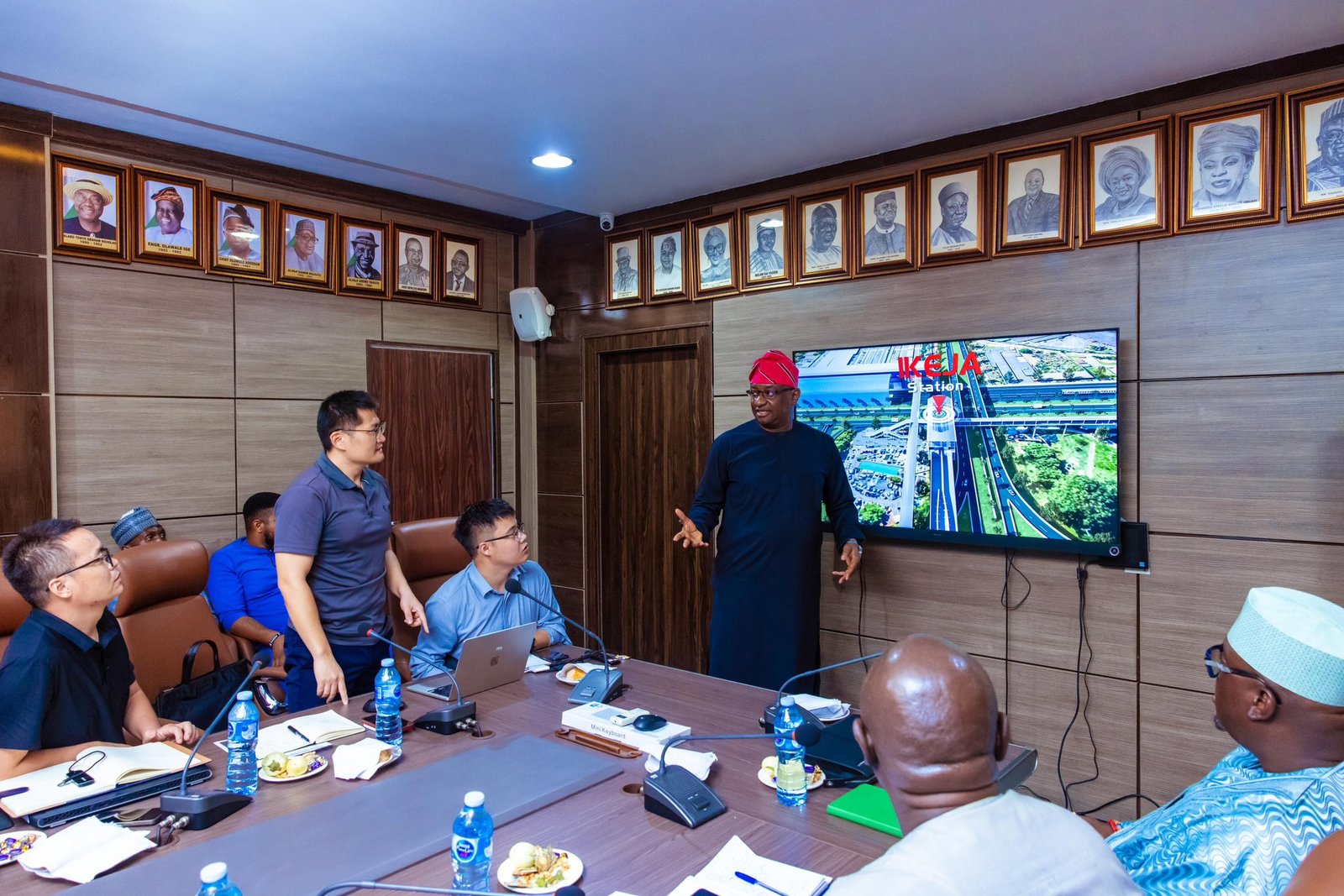
Minister of Aviation, Festus Keyamo and the engineering team
LAGOS, Nigeria – Nigeria’s Aviation Minister Festus Keyamo has approved the design of a proposed Lagos airport monorail featuring five stations, a project intended to improve rail connectivity between Ikeja and Murtala Muhammed International Airport.
Keyamo disclosed the approval in a statement on Tuesday after meeting with the Permanent Secretary of the Federal Ministry of Aviation and Aerospace Development, the Managing Director of the Federal Airports Authority of Nigeria (FAAN) and engineering teams from both agencies.
The proposed monorail will connect Ikeja Railway Station, where the Lagos Red Line terminates, to the airport complex, offering commuters and air passengers an alternative to road transport.
According to the minister, the project will have five stations: Ikeja Station, Domestic Airport Station, Beesam Station, Toll Gate Station and Murtala Muhammed International Airport Station. “We appraised and approved the design of the Lagos Airport monorail that would take commuters and the flying public from the Ikeja Railway Station (where the Lagos Redline terminates) to the terminal point at the new Murtala Mohammed International Airport (MMIA) Terminal 1 that is now being reconstructed,” Keyamo said.
The project follows earlier Federal Government plans to extend the Lagos Red Line into the airport complex and connect its three terminals to the rail network. However, the newly approved design does not establish when construction will begin or when the monorail will become operational.
Keyamo did not announce a construction commencement date or completion timeline in his statement. The project will also need to progress beyond design approval before passengers can use the proposed service. The minister’s announcement did not provide details of the construction schedule, projected passenger capacity or the estimated cost of the development.
The monorail proposal comes as Terminal 1 at Murtala Muhammed International Airport undergoes reconstruction. International flight operations are continuing under temporary arrangements while the terminal project proceeds.
Improving airport access has implications for passengers, airport workers and other commuters who depend on road transport to reach the facility. A direct rail connection could offer an additional travel option, although the project’s eventual impact will depend on its delivery and integration with existing transport services.
About the Author


 Oluwatobi Adu