 Oluwatobi Adu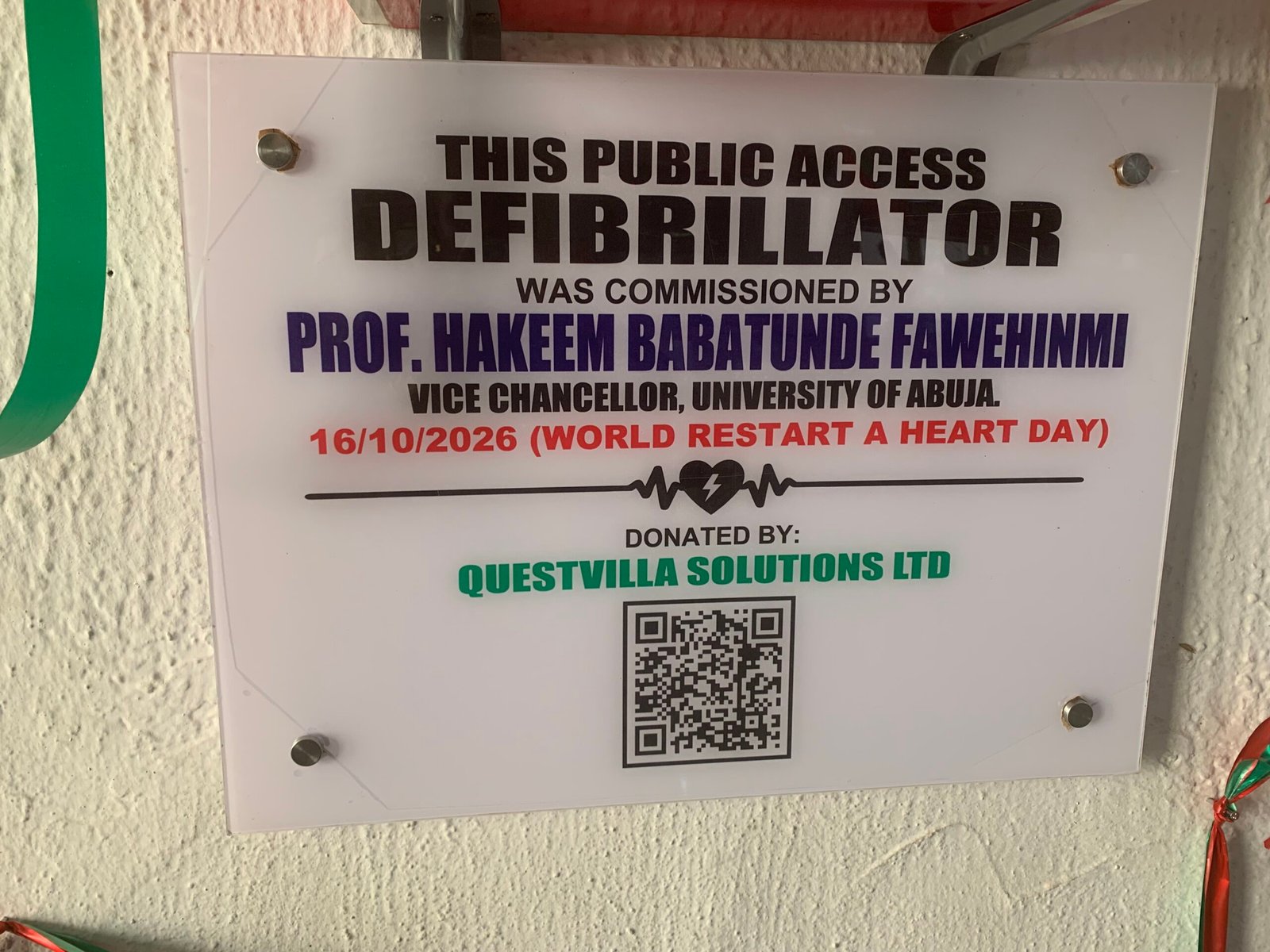
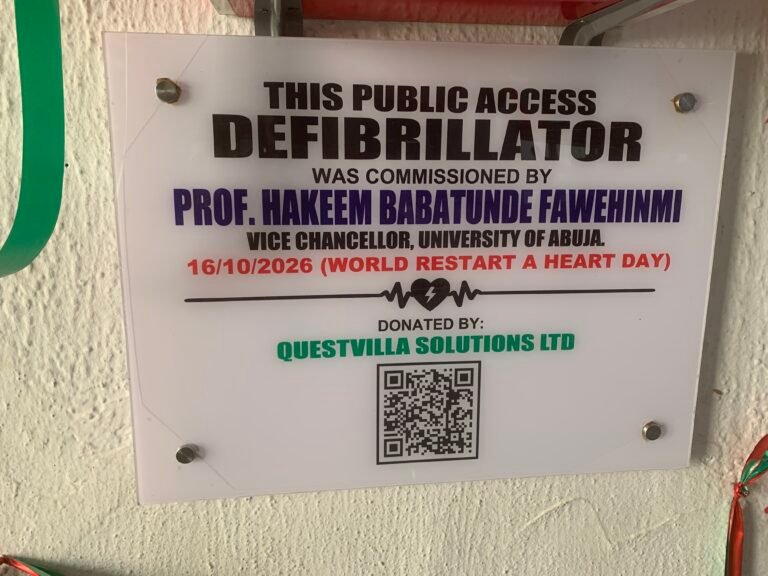
ABUJA, Nigeria – The University of Abuja has commissioned a public-access defibrillator and trained community members in cardiopulmonary resuscitation (CPR) to improve responses to cardiac arrest before medical professionals arrive.
The initiative, organised by the university’s Health Services in collaboration with the Society for Public Health and Social Development, was unveiled on Friday in Abuja to mark World Restart a Heart Day.
Questvilla Solutions Ltd donated the defibrillator, while selected members of the university community received practical training in CPR and other basic life support techniques.
The intervention comes amid concerns about Nigeria’s emergency cardiac care system. Delays in resuscitation and limited access to pre-hospital care can reduce survival chances following an out-of-hospital cardiac arrest.
A 2026 study published in BMC Emergency Medicine, which examined 387 out-of-hospital cardiac arrest cases managed at selected Nigerian hospitals, found that only seven patients (1.8 per cent) survived to hospital discharge. The findings highlighted gaps in the emergency response system.
Speaking at the event, Professor Augustine Odili, a cardiovascular medicine specialist and immediate past president of the Nigerian Cardiac Society, said the society developed its Bring Back to Life programme in response to reports of people collapsing in public without receiving timely medical assistance. “During my presidency in the Nigerian Cardiac Society, the reports of incessant people dropping dead on the streets and everywhere was a major concern to us,” Odili said.
He said the programme equips members of the public, including those without medical training, with basic life support and resuscitation skills.
Odili added that expanding accredited training centres would improve access to the programme. He identified the Society for Public Health and Social Development as one of the centres providing basic life support training.
He also stressed the importance of installing automated external defibrillators (AEDs) in public places. These devices analyse heart rhythms and deliver an electrical shock when necessary, during certain types of cardiac arrest.
The University of Abuja’s Vice-Chancellor commended the initiative, saying trained members of the university community could spread life-saving knowledge beyond the institution. “You are training an army of over 40,000 change agents,” the Vice-Chancellor said.
He pledged the university management’s support for sustaining the programme and expanding its reach.
Chukwemeka Eze, a representative of Questvilla Solutions Ltd, reaffirmed the company’s commitment to initiatives that improve community welfare.
The Society for Public Health and Social Development also called for life-saving training to be extended to churches, mosques and other community settings.
Participants received practical demonstrations on assessing an unresponsive person, checking for breathing and performing CPR.
About the Author

 Hope Ajayi
 Mirian Gom