 Mirian Gom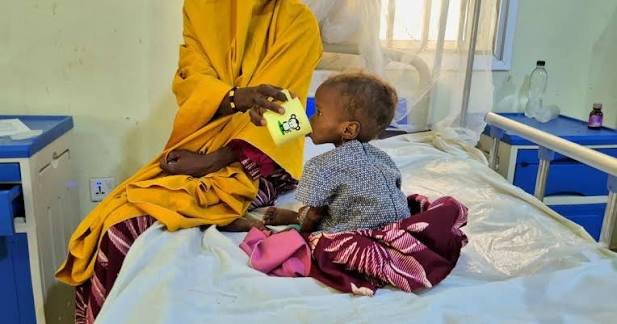
ABUJA, Nigeria — Malnutrition admissions at health facilities supported by the International Committee of the Red Cross (ICRC) in northeast Nigeria rose by 18 per cent, from 17,000 cases in January–September 2025 to nearly 20,000 during the same period in 2026.
The ICRC disclosed the figures in a statement issued in Abuja on Thursday, warning of growing nutritional challenges among communities affected by conflict, economic hardship and climate-related shocks.
The organisation’s Public Relations Officer, Aliyu Dawobe, said the cases were recorded across six health centres and four hospitals supported by the ICRC between January and September.
Young children, pregnant women and breastfeeding mothers remain particularly vulnerable as insecurity, disrupted livelihoods and rising living costs limit access to adequate food. Conflict has also disrupted farming, trade and access to essential services in parts of the region, worsening household food insecurity.
Mubi Records 24% Rise in Malnutrition Cases
In Mubi, Adamawa State, malnutrition admissions increased by nearly 24 per cent, from about 4,600 cases in January–September 2025 to approximately 5,700 during the same period in 2026. “At the Mubi Stabilisation Centre, mothers bring their children for nutritional assessments and treatment, while some also collect specialised food provided to support the recovery of malnourished children,” Dawobe said.
He cited the experience of Zulaihatu Mohammed, who brought her six-month-old daughter, Huseina, one of her twins, to the centre for nutritional assessment and food collection.
Dawobe said Huseina had been unwell since birth, prompting her mother to seek medical and nutritional support. “When I gave birth to them, this one was tiny,” Mohammed said, describing her daughter’s condition at birth.
Mohammed visited the centre to obtain specialised food for her children and seek help for Huseina. Her experience highlights the challenges families face in accessing sustained nutritional support, particularly when food and healthcare remain difficult to obtain.
Conflict and Economic Hardship Worsen Food Insecurity
The rising admissions come amid persistent humanitarian challenges across northeast Nigeria, where armed conflict, climate-related shocks and economic pressures have disrupted livelihoods and weakened household food security.
Malnutrition can impair children’s growth and development while increasing their vulnerability to illness. Pregnant and breastfeeding women also face greater nutritional demands.
The ICRC figures cover only the health facilities it supports and do not represent the total number of malnutrition cases across northeast Nigeria. However, the reported increase highlights the growing pressure on facilities providing nutritional assessments, treatment and specialised food to vulnerable families.
About the Author

 Hope Ajayi