
 Mirian Gom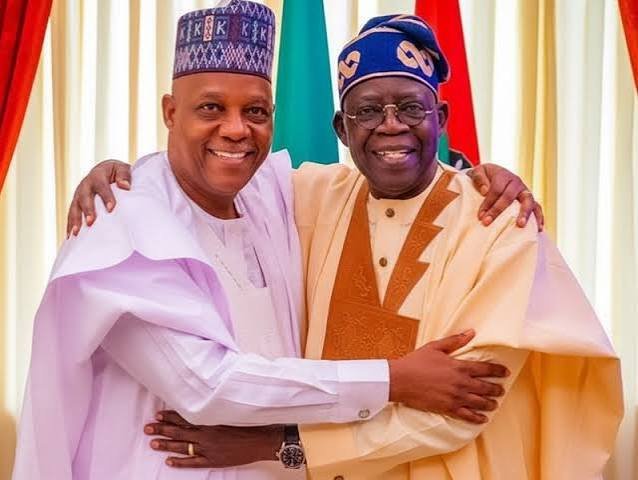
President Bola Tinubu and Vice President Kashim Shettima
ABUJA, Nigeria – Human rights lawyer Inibehe Effiong has questioned the constitutional implications of President Bola Tinubu and Vice President Kashim Shettima being outside Nigeria at the same time, citing the procedure for presidential absence under Section 145 of the 1999 Constitution.
Effiong raised the issue on Channels Television’s The Morning Brief on Tuesday while discussing Tinubu’s extended stay abroad and Shettima’s trip to New York for the 81st United Nations General Assembly.
Tinubu left Nigeria on August 30 for what the Presidency initially described as a working vacation. The Presidency subsequently announced that he had extended his stay and would return at the weekend. Shettima left Abuja on September 20 to represent Tinubu at the UN General Assembly.
“Under Section 145, subsection one, under the Constitution, presidential powers are powers that are domiciled exclusively in the President, namely the powers of the Commander-in-Chief. It is not delegable.”
Section 145(1) provides that when the President proceeds on vacation or is otherwise unable to perform his functions, he is to transmit a written declaration to the President of the Senate and Speaker of the House of Representatives. The Vice President then performs presidential functions as Acting President until the President communicates his availability to resume those functions. Section 145(2) provides a mechanism for National Assembly action if the declaration is not transmitted within 21 days.
Effiong said more than 21 days had elapsed since Tinubu left Nigeria and argued that the National Assembly should address the matter. “What President Tinubu has done is not only an abdication of his constitutional mandate; it is a brazen violation of the Constitution, and he should be compelled.”
About the Author



 Oluwatobi Adu
 Hope Ajayi