 Oluwatobi Adu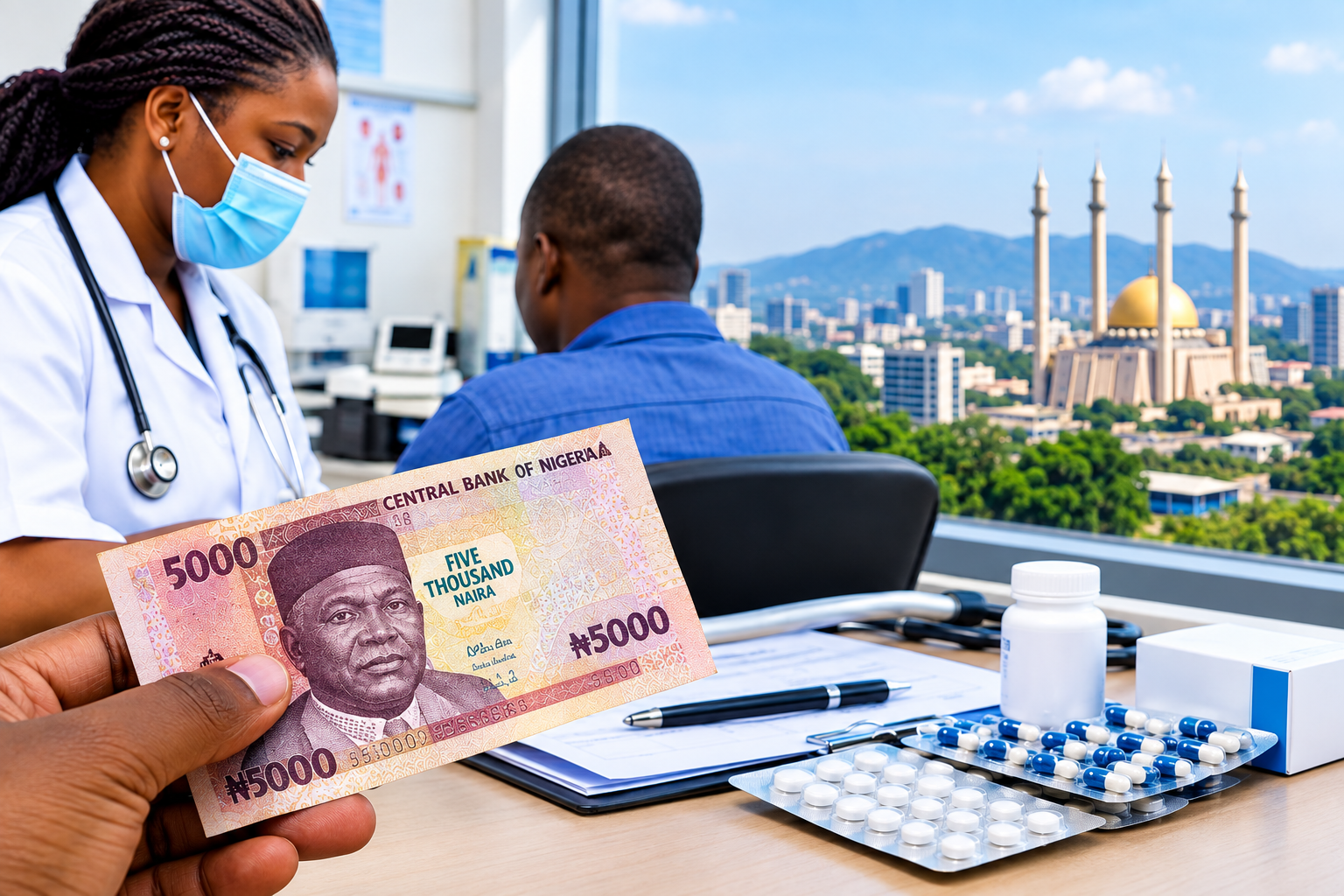
ABUJA, Nigeria – For many Abuja residents, falling ill is no longer just a health concern. It is also a question of how far their money can go. With the cost of registration, consultation, diagnostic tests and medicines rising, a patient walking into a hospital with ₦5,000 may have to decide which part of the treatment they can afford.
So, can ₦5,000 still get a patient treated in Abuja in 2026?
Africa Health Report visited public and private health facilities across the Federal Capital Territory and spoke with patients and health workers to find out what the amount can actually cover.
The findings show that while ₦5,000 may be enough for some basic services at certain facilities, it can quickly disappear once diagnostic tests and prescribed medicines are added.
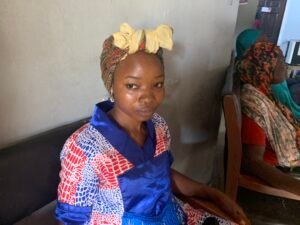
The experience of 21-year-old Imabong, who visited Asokoro General Hospital for malaria treatment, illustrates just how quickly the cost can rise.
“I made registration and consultation was ₦1, 000, the recommended test cost me ₦3,000 and the prescribed drugs were ₦5,500,” she said.
For Imabong, the question was not hypothetical.
In total, Imabong spent ₦9,500 on registration, consultation, testing and prescribed medicines — almost twice the ₦5,000 starting point.
That meant the ₦5,000 benchmark was insufficient even before considering other possible expenses that a patient may incur, such as transportation, additional tests or follow-up visits. Her experience raises a broader question about what happens to patients who arrive at a health facility with limited cash and cannot immediately afford the full cost of care.
Imabong’s case does not represent the cost of malaria treatment at every Abuja hospital. But it provides a clear example of how quickly a seemingly modest hospital visit can move beyond what many patients may have available.
At Gwarinpa PHC, ₦5,000 May Cover the Visit — But Not Necessarily the Treatment
At the Gwarinpa Primary Health Centre, patient Clementina Silas said she had already spent ₦1,000 on registration and came to the facility with ₦8,000 because she was unsure whether it would be enough.
“I don’t believe ₦5,000 can do anything,” she said, adding that she would have to return home to raise more money if the amount she had was insufficient.
Nurse Abishag, a Routine Immunisation Officer at the facility, explained that the cost depends largely on what a patient is being treated for.
She said consultation costs ₦500, while registration is ₦700 for an individual card and ₦1,000 for a family card.
However, the cost can increase once tests and medicines are required.
According to her, malaria and typhoid tests could cost around ₦2,000, leaving a patient with only ₦3,000 from an initial ₦5,000.
A urine test could cost another ₦1,000.
She explained that malaria testing may be free when testing kits are available at the centre, but could cost between ₦1,000 and ₦1,500 when the facility has to purchase the kits. Typhoid testing could also fall within a similar range.
The distinction is important: ₦5,000 may cover registration and consultation at some public facilities, but that does not necessarily mean it will cover the patient’s complete treatment.
At Kubwa General Hospital, Specialist Care Can Push the Bill Higher
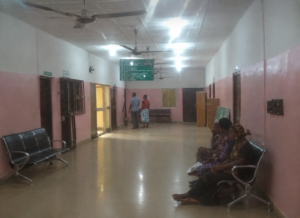
At Kubwa General Hospital, Miss Adewunmi, a first-time patient, said she paid ₦2,000 for a gynaecology consultation and ₦3,000 to see an eye doctor without insurance.
She also reported paying ₦1,000 for a blood test.
She said some prescribed medication was unavailable through the hospital pharmacy and had to be obtained elsewhere.
Adewunmi also described a difference in what insured and uninsured patients pay, saying NHIS patients she observed did not pay consultation fees and paid about 10 per cent of their drug costs.
Her experience highlights another factor in healthcare affordability: health insurance can substantially change what a patient pays directly at the point of care.
However, the charges reported by individual patients should not be taken as standard prices across all public hospitals in Abuja.
At JOWAKO, ₦5,000 Can Be Exhausted Before Treatment Begins
At JOWAKO Specialist Hospital in Jabi, Dr Nwobu said it would be difficult to say that ₦5,000 is enough to treat a patient because healthcare needs vary from one person to another.
He said a new patient pays ₦5,000 for consultation and another ₦5,000 for registration.
That means a new patient could spend the entire ₦5,000 benchmark on consultation alone, depending on the facility’s charges, without including diagnostic tests or medicines.
Dr Nwobu said some basic tests, including malaria parasite testing and a lipid profile, could be carried out within the ₦5,000 range in some circumstances.
“We can’t say ₦5,000 can treat a patient, because different patients have their peculiarities,” he said.
Private Facilities: ₦5,000 May Cover Some Tests or Drugs
At Tabitha Medical Centre, the manager said ₦5,000 could cover some basic tests and a limited quantity of medicines.
“Yes, ₦5,000 can do some basic tests and can also buy some few drugs,” the manager said.
But the amount a patient ultimately spends depends on the illness, the tests requested, the medicines prescribed and the facility’s charges.
That variation makes it difficult to put a single price tag on “treatment” in Abuja.
What ₦5,000 can cover for one patient may not be enough for another.
What Can ₦5,000 Really Buy in Abuja?
The field visits suggest that ₦5,000 can still provide access to some basic healthcare services in Abuja, but it cannot reliably guarantee complete treatment.
At some public facilities, the amount may cover registration and consultation, with little left for testing or medication.
At others, consultation or registration alone can consume much or all of the amount.
And in Imabong’s case, a malaria-related hospital visit cost ₦9,500 after registration, consultation, testing and prescribed drugs.
The difference is significant.
A patient arriving with ₦5,000 may therefore have enough to start the process but not enough to finish it.
Nigeria’s Out-of-Pocket Burden
The challenge is occurring against a wider backdrop of heavy reliance on direct payments for healthcare.
World Bank data sourced from the World Health Organisation’s Global Health Expenditure Database shows that out-of-pocket expenditure accounted for 71.9 per cent of Nigeria’s current health expenditure in 2023.
A 2026 analysis by Nigeria Health Watch put the share at about 76.1 per cent, highlighting the continuing burden on households that pay directly for healthcare.
For patients without adequate health insurance or other financial protection, every consultation, test and prescription can therefore become another out-of-pocket expense.
The Abuja field test shows what that burden looks like at the individual level.
When ₦5,000 Is Not Enough
The experiences of patients across the facilities visited by Africa Health Report point to the same problem from different angles: the price of entering the healthcare system is not necessarily the price of completing treatment.
A patient may be able to register and see a health worker with ₦5,000, only to discover that diagnostic tests and medicines require several thousand naira more.
Imabong’s ₦9,500 malaria bill makes that gap particularly clear.
For a patient with only ₦5,000, the challenge may no longer be getting through the hospital door. It is whether the money will last long enough to get a diagnosis, buy the prescribed medicine and actually complete treatment.
About the Author


 Mirian Gom
 Hope Ajayi