 Korede Abdullah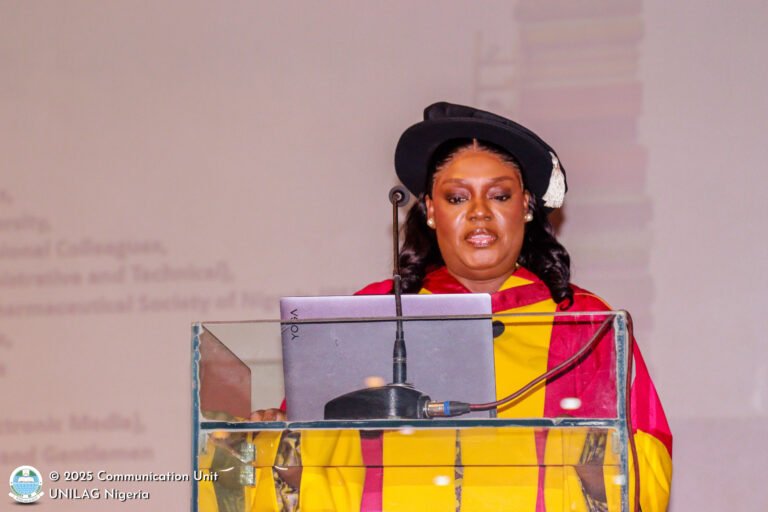
Professor Gloria Ayoola delivering inaugural lecture on medicinal plant research at UNILAG auditorium. (Photo: UNILAG)
LAGOS, Nigeria – A leading Nigerian scientist, Professor Gloria Abiodun Ayoola of the University of Lagos (UNILAG), has called for a stronger national focus on Nigeria’s rich medicinal plant heritage, saying many potential cures to global diseases may already exist locally.
Delivering the 446th Inaugural Lecture of UNILAG, titled “Molecules That Heal: The Exploration of a Medicinal and Natural Product Chemist,” Ayoola declared that “the cure to many of the world’s toughest diseases might just be growing in our backyards.”
She identified several African plants—including African walnut, African star apple, Efo Worowo (Senecio biafrae), guava, mango, pawpaw, and bitter leaf—as sources of compounds with antioxidant, antibacterial, antidiabetic, and anti-inflammatory properties.
“Nature has never stopped giving,” she noted, explaining that modern tools such as chromatography, spectroscopy, and bioinformatics are revolutionising the study of traditional medicine by isolating key bioactive molecules.
Addressing the global threat of antimicrobial resistance (AMR), Ayoola said her research on bisbiguanide analogues of chlorhexidine shows potential for reviving old antibiotics against multidrug-resistant bacteria.
“Nigeria is blessed with many molecules that heal,” Ayoola emphasised. “We must continue exploring, testing, and transforming them into medicines that save lives.”
About the Author


 Mirian Gom