
The Degree Trap: Inside Nigeria’s Growing Graduate Employability Crisis
 Oluwatobi Adu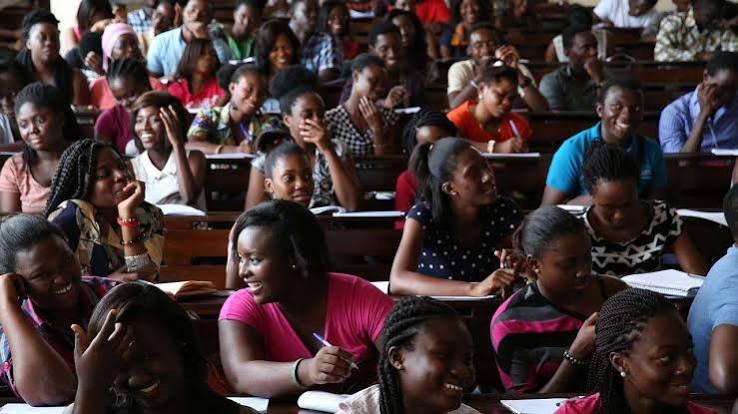
ABUJA, Nigeria – For millions of young Nigerians, a university degree is supposed to unlock opportunity. Instead, many graduates discover that the certificate they worked years to earn is no longer enough to secure a job.
Across the country, employers say too many graduates lack the practical, digital and workplace skills today’s economy demands, leaving thousands trapped between graduation and employment. In this report, Oluwatobi Adu investigates why Nigeria’s graduate employability crisis persists despite rising tertiary enrolment. Through the experiences of students, recruiters and education experts, the report reveals how outdated curricula, weak industry partnerships and limited practical training are producing graduates with qualifications but without the skills employers need.
When the Classroom Meets the Workplace
For Alade Toyosi, an HND I student at Federal Polytechnic Offa, practical learning changed her understanding of Information Technology.
Through a partnership between the institution and One Innovation Hub, she received hands-on training in software and web development.
“It’s very practical because we actually build websites and software ourselves. It has helped me understand IT better because we learn by doing, not just in class.”
She said the institution now has specialised laboratories for software development, artificial intelligence, networking and cybersecurity, supported by internet access, standby electricity and laptops.
However, she believes entrepreneurship education still needs improvement.
“We only had practical entrepreneurship classes during our National Diploma programme. Now it is mostly theory.”
For Alade Tunmise Matthew, a final-year Agricultural Education student at the College of Education, Oro, practical farming became the highlight of his academic journey.
“It was exciting participating in poultry breeding and planting maize and vegetables. Those practical sessions were some of my happiest moments.”
The knowledge has remained useful after school.
“I still rear broilers and rabbits using what I learnt, but I want more training so I can build a proper business instead of waiting for government jobs.”
Computer Science graduate Kalline Effiong described her education as valuable but incomplete.
“The programme gave me theoretical knowledge and helped me develop critical thinking, but there was much more classroom learning than practical workplace experience.”
After graduation, she realised employers expected skills beyond her degree.
“I had to learn digital skills, communication, content creation and research. I discovered that having a degree alone is not enough.”
For Adepoju Feranmi, an HND II student of Library and Information Science at Federal Polytechnic Offa, her three-month industrial attachment offered a glimpse of professional life.
Working across several units of the NSPRI E-Library, she applied classroom knowledge in cataloguing, classification, information retrieval and digital library services.
“My practical training helped me understand how a modern library really operates.”
Still, she believes graduates need stronger digital competencies, workplace communication skills and continuous practical exposure before graduation.
Nigeria’s Graduate Employability Crisis
The experiences of these students reflect a wider national challenge.
According to research by Proten International presented in Lagos in 2026, nearly 60 percent of Nigerian employers consider many fresh graduates unemployable because they lack workplace-ready skills.
The study also found that more than 55 percent of graduates work outside their fields of study, highlighting the disconnect between tertiary education and labour market needs.
At the same time, interest in technical and vocational education continues to grow, with about 960,000 applications submitted through the Federal Government’s TVET platform, demonstrating increasing demand for practical skills training.
What Employers Want
HR consultant Obeten Mbang believes Nigerian graduates possess knowledge but often struggle to apply it.
In an exclusive interview with Africa Health Report, he described graduate workplace readiness as “moderate but unequal.”
“The issue is not necessarily that graduates lack knowledge. Many simply have limited opportunities to translate academic learning into practical workplace outcomes.”
From his recruitment experience, employers commonly identify gaps in communication, teamwork, adaptability, digital literacy, professionalism and problem-solving.
Today’s organisations, he explained, want graduates who can manage tasks independently, collaborate effectively and adapt quickly.
However, Mbang believes employers also share responsibility.
“Entry-level positions should be opportunities for young people to gain experience, not barriers that demand years of experience before employment.”
He advocated stronger internship programmes, structured graduate trainee schemes, mentoring and closer collaboration between industries and tertiary institutions.
“Educational institutions must produce more practically prepared graduates, while employers should provide structured pathways that help young professionals develop.”
Experts Call for Curriculum Reform
Education experts argue that the problem begins inside classrooms.
Yusuf Tunde Idris, an education specialist at Osun State College of Technology, believes entrepreneurship education has become disconnected from students’ disciplines.
“Students are often taught business skills that have little or no relationship with what they study.”
He recommended compulsory, field-specific practical training integrated into every academic programme and assessed through demonstrated competence rather than written examinations alone.
“The curriculum should create a direct relationship between theory and practice before graduation.”
President of the Colleges of Education Academic Staff Union (COEASU), Dr Ahmed Lawan Bazza, agrees.
He said Colleges of Education must move beyond producing certificate holders to developing graduates with practical competencies.
“We need a deliberate transition from certificate-oriented education to competency-oriented education.”
According to him, achieving this will require stronger teaching practice, improved laboratories, digital learning facilities, industry partnerships and continuous curriculum review.
Similarly, Dr A.K. Agunbiade, Head of Business Administration at Federal Polytechnic Offa, said Nigeria’s polytechnics already have practical training policies, but implementation remains inconsistent.
“Graduates often leave with certificates but still require significant retraining before they become productive in industry.”
He identified outdated laboratories, inadequate funding, weak industry partnerships, ineffective SIWES placements and poor curriculum implementation as major obstacles.
“The challenge is not policy; it is implementation.”
He recommended upgrading laboratories, strengthening industrial attachments, involving industry in curriculum development and exposing lecturers to current workplace practices.
Beyond Certificates
Nigeria’s graduate employability crisis is no longer simply an education issue.
It is an economic challenge affecting businesses, productivity and youth employment.
Every year, employers struggle to recruit work-ready graduates while thousands of young people remain unemployed despite holding tertiary qualifications.
Bridging that disconnect requires coordinated action from government, educational institutions, employers and regulatory agencies.
Modern facilities must replace outdated laboratories.
Industrial training should become meaningful rather than procedural.
Curricula must be reviewed regularly to reflect technological change, artificial intelligence, entrepreneurship and emerging labour-market demands.
Equally important, employers must invest in graduate development rather than expecting finished professionals from day one.
From Degrees to Skills
The voices in this report point to one unmistakable conclusion: Nigeria does not suffer from a shortage of graduates—it suffers from a shortage of graduates equipped for today’s workplace.
Unless tertiary education shifts from rewarding memorisation to building competence, more young Nigerians will continue to leave school with certificates that impress on paper but struggle to translate into meaningful employment.
A degree should represent more than years spent in lecture halls. It should signal the knowledge, confidence and practical ability to solve problems, create jobs and contribute to national development. Until Nigeria’s education system consistently produces graduates who are ready for work—not just ready to graduate—the country’s employability crisis will continue to grow, leaving countless young people with qualifications but without opportunities.
About the Author


 Korede Abdullah
1 thought on “The Degree Trap: Inside Nigeria’s Growing Graduate Employability Crisis”