 Oluwafunbi Bello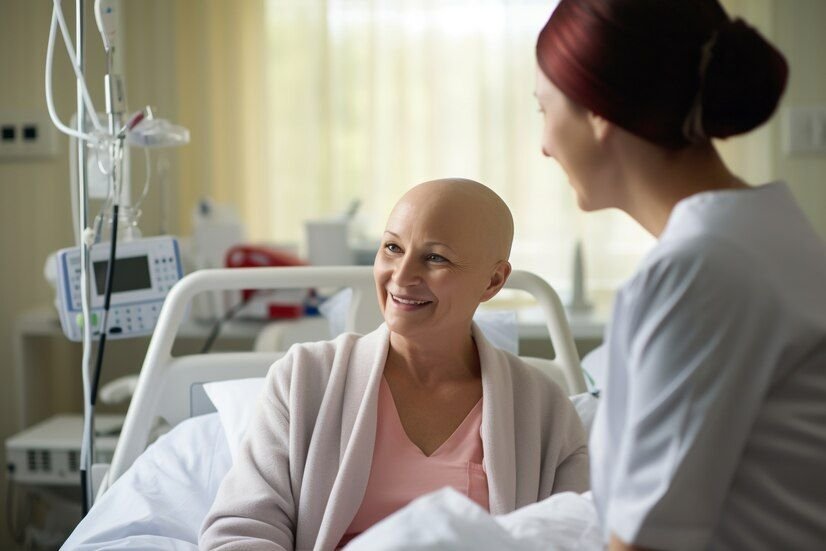
ABUJA, Nigeria – A cancer diagnosis is devastating. But for many Nigerian families, the emotional shock is quickly followed by another frightening reality: finding enough money to keep a loved one alive. Across the country, cancer patients are not only battling a life-threatening disease—they are fighting a healthcare system where treatment often depends on what a family can afford. Chemotherapy, radiotherapy, surgery, scans, medicines and repeated hospital visits can cost millions of naira, forcing households to sell property, exhaust their savings, borrow heavily or rely on public appeals for survival. In this report, Oluwafunbi Bello examines the growing financial burden of cancer care in Nigeria through the experiences of patients and families whose lives have been transformed by the cost of treatment. Drawing on personal testimonies, health financing research and expert insights, the report explores why surviving cancer increasingly depends not only on medical care, but also on economic survival.
“We Almost Sold Our House”
For Imam-Lawal Rofiat, her father’s four-year battle with nasopharyngeal cancer became a financial crisis that affected the entire family.
Her father, Mr. Imam-Lawal, was diagnosed with the rare head and neck cancer in 2019. He died in 2023 after years of treatment that left the family burdened with debt.
“My dad almost sold his house for treatment. The drugs were very, very expensive. Every therapy session cost a lot. We spent millions on his treatment, and even after he died, there were still loans we had to repay,” she told Africa Health Report.
For Rofiat, the family’s struggle did not end with her father’s death. The financial consequences continued long after they had buried him.
Her experience reflects the reality confronting thousands of Nigerian families, where limited insurance coverage means patients shoulder much of the cost of cancer treatment themselves.
Research published in a 2025 scoping review on cancer financing in Nigeria found that out-of-pocket spending for cancer care can exceed the country’s gross domestic product per capita, placing enormous financial pressure on affected households.
When Survival Costs Millions
Mrs Chux understands that burden all too well.
Diagnosed with breast cancer in 2021, she estimates she spent about ₦7 million on treatment.
“I was diagnosed with breast cancer in 2021, and I spent ₦7,000,000 on treatment. Getting that money was only by the grace of God,” she said.
Although she survived, she worries that rising inflation has made treatment even more difficult for newly diagnosed patients.
“Cancer treatment is simply too expensive.”
Her experience mirrors findings from the 2025 COST-FIN study, which reported that 70.6 percent of cancer treatment expenses among patients surveyed were paid directly out of pocket. The study also found that financial hardship contributed to delayed diagnosis or treatment for seven out of every 10 patients.
For many Nigerians, the ability to pay often determines how quickly treatment begins—and sometimes whether it begins at all.
When Access Depends on Money
The financial burden extends beyond medicines.
Patients often travel hundreds of kilometres searching for functioning radiotherapy machines, specialist hospitals or cancer centres capable of providing treatment.
Nigeria Health Watch documented the experience of 33-year-old David Udo, who developed cancer affecting his eye and jaw.
After chemotherapy at Ahmadu Bello University Teaching Hospital, Zaria, failed to stop the disease, he was referred to the National Hospital Abuja for radiotherapy. However, the radiotherapy equipment was reportedly not working, forcing another referral to Lagos University Teaching Hospital.
At LUTH, he was reportedly informed that radiotherapy would cost ₦787,000.
By then, he had already lost his job because of illness and could no longer afford treatment.
According to the report, he described himself as “depressed and tired of life.”
His story illustrates how inadequate infrastructure can significantly increase the financial burden on patients already struggling with serious illness.
Nigeria’s National Cancer Control Plan identifies equipment shortages, infrastructure gaps, inadequate specialist capacity and frequent equipment downtime among the challenges affecting cancer care nationwide.
The Hidden Cost of Cancer
Cancer treatment rarely involves a single hospital visit.
Patients often require multiple laboratory investigations, scans, biopsies, surgery, chemotherapy, radiotherapy, targeted medicines and years of follow-up care.
Every delay increases costs.
Every complication adds another bill.
For households without comprehensive health insurance, treatment can consume years of savings within months.
Researchers behind the 2025 COST-FIN study concluded that cancer care in Nigeria creates catastrophic health spending for many households because patients finance most treatment directly.
The 2025 scoping review reached a similar conclusion, identifying inadequate financing as one of the country’s biggest barriers to cancer care.
The result is a vicious cycle.
Patients need treatment to remain healthy enough to earn a living, yet the cost of treatment often destroys their financial stability, while illness itself reduces their ability to work.
Can Health Insurance Make Cancer Care Affordable?
Health financing experts believe wider insurance coverage could significantly reduce the burden on patients.
Mr. Williams Ebiokobo, Coordinator of the National Health Insurance Authority (NHIA) in the Federal Capital Territory, said the Authority’s partnership with Roche Pharmaceuticals has reduced medicine costs for some cancer patients.
“For cancer patients, Roche Pharmaceuticals covers 50 percent of medication costs, NHIA pays 30 percent, while the patient contributes 20 percent,” he said.
The arrangement provides important relief for eligible patients.
However, medicines represent only one part of cancer treatment.
Patients may still pay for consultations, investigations, surgery, transport, accommodation and other medical expenses depending on their insurance package.
Health experts argue that expanding insurance must therefore go beyond medicine subsidies to include comprehensive cancer care.
Beyond Treatment Bills
Cancer affects families long after hospital appointments end.
For Rofiat, it meant years of debt after losing her father.
For Mrs. Chux, survival came at a cost of millions of naira.
For David Udo, financial hardship, unemployment and limited access to radiotherapy combined to make an already difficult diagnosis even more overwhelming.
Their stories reveal that cancer is not only a medical emergency—it is also an economic crisis.
Behind every national statistic is a family making impossible decisions about whether to sell land, withdraw children from school, borrow money or abandon treatment altogether.
The Cost of Delay
Nigeria continues to strengthen cancer services and expand health insurance, but the experiences shared in this report show that progress remains uneven.
Improving survival rates will require more than new treatment centres. It demands reliable diagnostic equipment, functional radiotherapy machines, stronger specialist services, wider insurance coverage and policies that protect families from catastrophic healthcare costs.
Cancer Should Never Become a Sentence to Poverty.
For a country striving toward Universal Health Coverage, access to life-saving cancer treatment should not depend on income, employment status or the size of a family’s savings account.
A diagnosis of cancer is already one of life’s hardest moments. Nigerians should not have to choose between saving a loved one’s life and losing everything they own. A health system that truly protects its people must ensure that no patient is denied treatment—or driven into poverty—simply because they became ill.
About the Author

 Korede Abdullah
 Mirian Gom