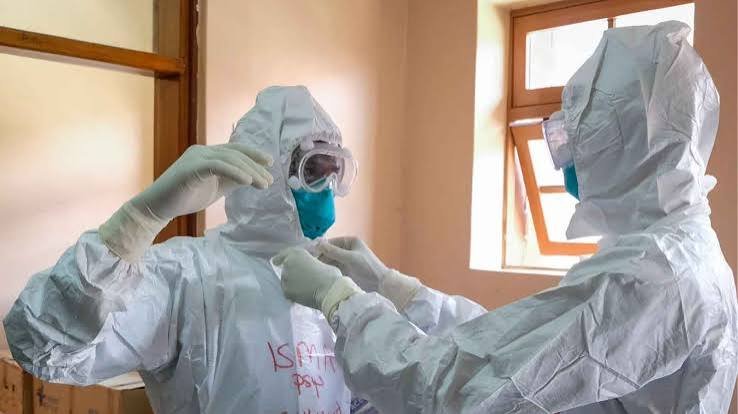
WHO Launches Free Training as 571m People Lack Healthcare Waste Management Services
 Oluwatobi Adu
ABUJA, Nigeria – The World Health Organization (WHO) has launched a free online training course on healthcare waste management after new global estimates revealed that about 571 million people receive care at health facilities without any waste management services, exposing health workers, patients and communities to avoidable health and environmental risks.
The WHO announced the initiative on Wednesday through its WHO Academy online learning platform, ahead of August 20, 2026, to equip healthcare workers, facility managers, planners and policymakers with practical skills for safely managing healthcare waste.
According to new data from the WHO/UNICEF Joint Monitoring Programme (JMP), only 71 per cent of healthcare facilities worldwide had basic healthcare waste management services in 2025, while 21 per cent had limited services and 7 per cent had none.
WHO Director and interim for the Department of Environment, Climate Change, One Health and Migration, Bruce Gordon, said effective healthcare waste management is essential to patient safety and infection prevention.
“Safe healthcare waste management is fundamental to quality care, infection prevention and control, and the protection of health workers, communities and the environment. This course gives health facility teams, planners and decision-makers practical knowledge they can use to improve waste management in their own settings,” Gordon said.
The six-module course provides practical guidance on healthcare waste classification, segregation, storage, transportation, treatment and final disposal. It also covers waste minimisation, recycling, infrastructure planning, and the safe handling of pharmaceutical waste and mercury-containing medical devices.
WHO noted that effective healthcare waste management extends beyond treatment equipment, stressing that inadequate handling of hazardous waste can contaminate water and soil, expose communities to infectious diseases and toxic substances, and release harmful pollutants through uncontrolled burning.
The organisation added that sustainable waste management requires trained personnel, reliable financing, strong monitoring systems, adequate infrastructure and clearly defined institutional responsibilities.
About the Author


 Korede Abdullah
 Mirian Gom