
Beyond Akara: Can Selling Street Food Really Lift Nigerians Out of Poverty?
 Oluwatobi Adu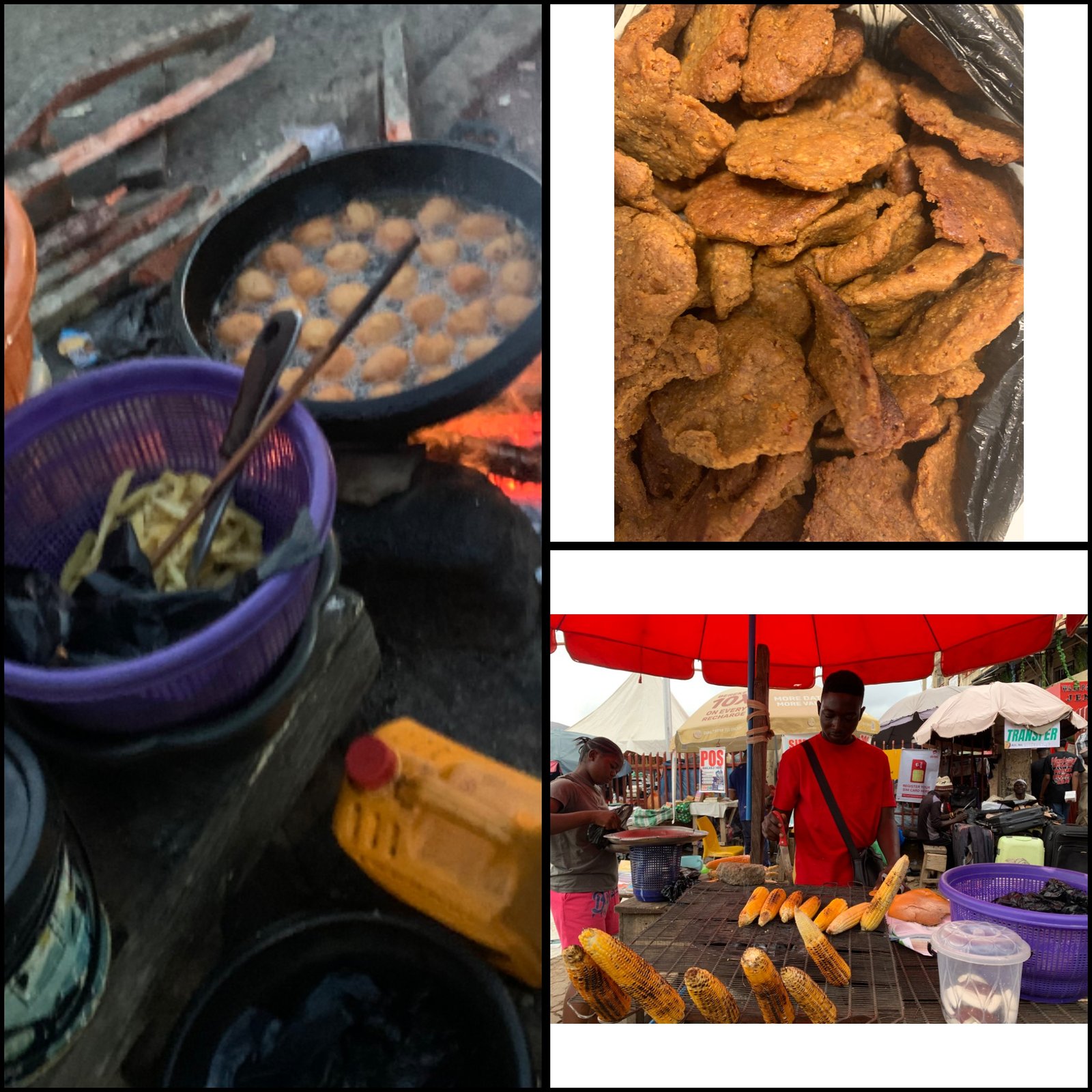
ABUJA, Nigeria — When Nigeria’s First Lady, Senator Oluremi Tinubu, encouraged unemployed youths to consider small businesses such as selling akara and roasted corn instead of waiting for white-collar jobs, the advice sparked widespread debate. Can these roadside businesses truly lift families out of poverty, or do they simply help households survive another day? To answer that question, Africa Health Report’s Oluwatobi Adu spent time with street food vendors across Abuja, examining their daily struggles, profits and prospects, while speaking with an economist to determine whether Nigeria’s vast informal food economy offers a genuine pathway to economic mobility.
Street Food: A Business of Necessity, Not Choice
Across Abuja’s streets, from Kpana Village in Jabi to Utako Market and Independence Avenue, thousands of Nigerians earn a living selling akara, roasted corn, boiled corn, kunu and kuli-kuli.
For many, the businesses were not born out of entrepreneurial ambition but economic necessity.
28-year-old Blessing, who sells akara in Kpana Village, said unemployment pushed her into the trade because it required relatively little capital.
“I wasn’t financially stable. Akara had high demand and I could start with little money,” she said.
Her business has survived rising inflation, but not without painful adjustments.
Instead of constantly increasing prices, she now reduces the size of each akara ball whenever the prices of beans, pepper and cooking oil rise.
“Before, one akara sold for ₦50. Now it’s ₦100 because everything has become more expensive.”
Despite the challenges, she says the business still generates at least ₦10,000 profit daily, enough to feed her family, pay rent and employ one assistant.
Inflation Is Eating into Profits
Blessing’s experience mirrors that of many informal food vendors across Nigeria.
According to the National Bureau of Statistics (NBS), food inflation has remained one of the biggest drivers of rising living costs, with staples such as beans, cooking oil, pepper and tomatoes recording significant price increases over the past year.
As ingredient prices continue to climb, vendors face a difficult choice: increase prices and risk losing customers or maintain prices while reducing portions and accepting smaller profit margins.
43-year-old Sarah Samuel, who sells akara and kunu at the same location, said that is exactly the decision she makes almost every week.
“When beans become expensive, I reduce the size of the akara. Some days I don’t even make a profit, but I believe tomorrow will be better.”
Sarah estimates that she earns between ₦5,000 and ₦10,000 on a good day.
“It pays my rent and sometimes my children’s school fees. It’s not easy, but we keep pushing.”
Surviving Inflation One Customer at a Time
The same struggle is evident among roasted and boiled corn sellers.
At Utako Market, Johnson Oyero, 19, helps his mother operate a roasted corn business.
He recalled that a bag of corn which sold for between ₦18,000 and ₦20,000 barely a year ago now costs as much as ₦37,000 to ₦40,000.
Transportation costs, fuel prices and supply challenges have all contributed to the increase.
“The money helped me pay for WAEC and JAMB,” he said. “It supports the family, but it doesn’t solve all our problems.”
Nearby, Dickson Daniel, who sells boiled corn with his mother and sister, said family labour has helped keep the business afloat.
According to him, they usually make around ₦9,000 to ₦10,000 daily, enough to support school fees and household expenses.

Not everyone records such returns.
Seasonal roasted corn seller Williams Stephen described the business as physically demanding with modest rewards.
“Sometimes my profit is just ₦3,500, and I still have to eat from that money.”
For Mrs. Godswill, who sells kuli-kuli and groundnuts, consistency has been the greatest advantage.
“This business trained my children and helped me build my own house. You may not become rich overnight, but if you manage it well, you won’t lose.”
Can These Businesses Really End Poverty?
To understand whether these small businesses offer a realistic escape from poverty, Africa Health Report spoke with economist and financial analyst Toheeb Adebeshin.
His answer was straightforward.
“These businesses help families survive, but they rarely lift them out of poverty.”
According to him, profitability depends largely on location, customer traffic and the ability to purchase raw materials in bulk.
An akara seller operating beside a busy junction will naturally attract more customers than one selling in a quiet neighbourhood.
However, he argued that even successful vendors remain vulnerable because inflation quickly erodes their purchasing power.
“Many traders use part of their business capital to feed their families. Once capital reduces, growth becomes almost impossible.”
He also linked rising food prices partly to insecurity in northern Nigeria, where much of the country’s beans and grains are produced.
Lower agricultural output, he said, inevitably translates into higher production costs for small food vendors.
Why Vendors Struggle to Grow
AHR findings show that most vendors operate without access to bank loans, formal savings schemes or business insurance.
Expansion plans are therefore financed almost entirely from daily profits.
Blessing hopes to open another akara outlet.
Sarah dreams of owning a permanent shop.
Johnson wants to complete his education.
Yet each admits that inflation often wipes out whatever savings they manage to set aside.
Economists say this cycle traps many informal businesses in survival mode.
Without affordable credit, stable electricity, improved transport infrastructure and lower food prices, many remain small regardless of how hard their owner’s work.
The Bigger Picture
Nigeria’s informal economy employs millions of people and serves as a critical safety net during periods of economic hardship.
Street food vendors provide affordable meals for low-income households while creating self-employment opportunities for thousands of women and young people who might otherwise have no source of income.
But experts caution against viewing informal trading as a substitute for long-term job creation.
They recommend easier access to low-interest loans, cooperative purchasing, lower fuel costs, improved security in farming communities and policies that reduce food inflation.
Such reforms, they argue, would allow small businesses not only to survive but to expand, employ more workers and contribute more meaningfully to economic growth.
More Than Survival
For many Nigerians, akara stalls, roasted corn stands and kuli-kuli tables are keeping food on the table, children in school and rent paid. But the evidence gathered for this report suggests that, on their own, they are rarely a reliable escape from poverty.
Without affordable credit, lower production costs, improved security, stable electricity, and broader economic reforms, these businesses remain acts of resilience rather than engines of prosperity. Nigeria’s informal food economy is helping families survive—but survival should not be mistaken for economic transformation.
About the Author


 Mirian Gom