
 Edino Chubiyo Cornelius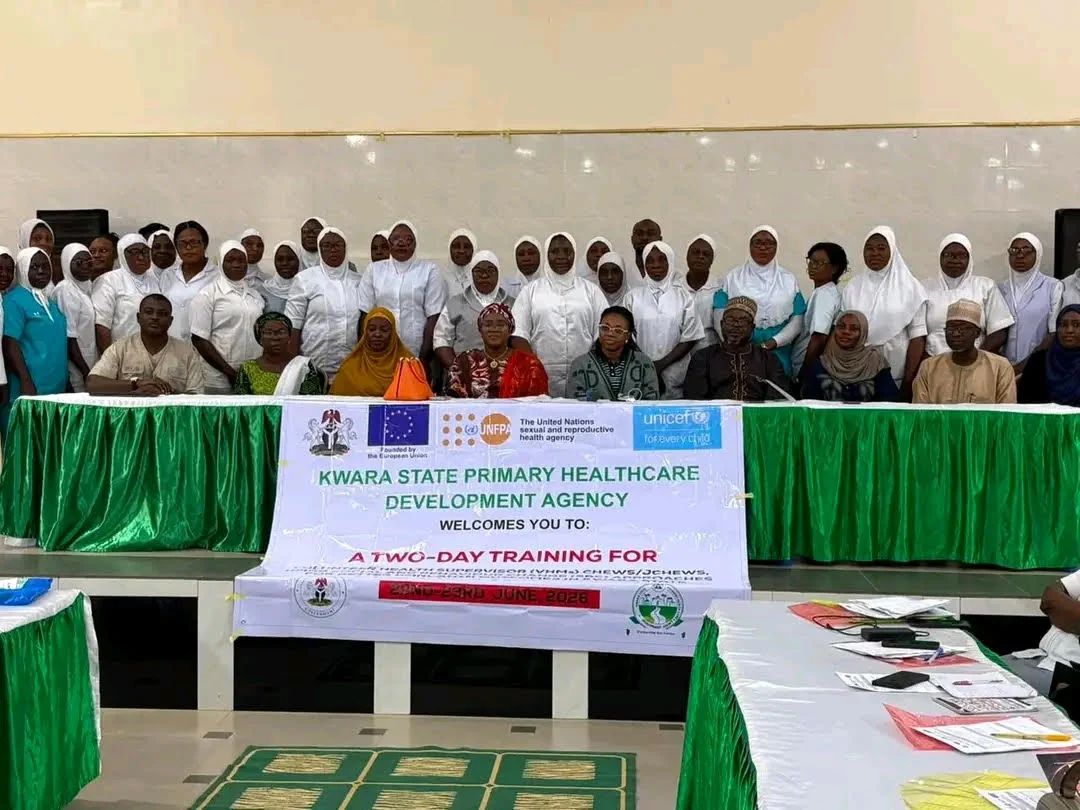
ILORIN, Nigeria – The Kwara State Government has launched a statewide training programme for frontline health supervisors across its 193 wards as part of efforts to strengthen primary healthcare services and improve health outcomes at the community level.
The two-day programme, organised by the Kwara State Primary Health Care Development Agency with support from UNICEF, brought together Community Health Extension Workers serving as Volunteer Health Supervisors.
A statement issued on Wednesday by the agency’s Press Secretary, Bukola Abdulganiyu, said the initiative aims to improve supervision, accountability and monitoring of community health workers.
Executive Secretary of the agency, Prof. Nusirat Elelu, said the training aligns with the state government’s commitment to strengthening healthcare delivery through continuous professional development.
She stressed that effective supervision remains critical to quality healthcare services.
“Regular capacity building is vital for improving service delivery, while effective supervision reinforces skills, improves accountability and raises healthcare standards,” Elelu said.
She urged participants to utilise the training to improve data collection, support evidence-based decision-making and enhance healthcare delivery within their communities.
Elelu also reaffirmed the agency’s commitment to maternal and child health programmes aimed at reducing preventable deaths among women, newborns and children.
Representing the state Ministry of Health, State Health Educator Jibril Abdulkareem said community participation remains essential for successful health interventions.
“Volunteer mobilizers serve as an important bridge between healthcare facilities and communities,” he said.
UNICEF Social and Behaviour Change Consultant, Dr Usman Danlami, said improving health outcomes requires both accessible services and behavioural change.
“Behaviour change strategies remain essential for addressing harmful practices, correcting misconceptions and increasing demand for vital health services,” he said.
Director of the National Orientation Agency in Kwara, Alhaji Dare Abdulganiyu, described community mobilisers as critical drivers of health interventions due to their close relationship with local communities.
About the Author



 Abah Felicity
 Oluwafunbi Bello