
 Mirian Gom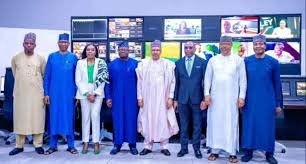
ABUJA, Nigeria – Nigeria has formally launched its long-delayed Digital Switch Over programme, a landmark initiative expected to reach 40 million homes, unlock more than N600 billion in economic opportunities and accelerate the country’s digital transformation.
The launch marks Nigeria’s transition from analogue to digital terrestrial television broadcasting after years of delays and repeated government commitments.
Speaking at the unveiling in Abuja on Wednesday, Minister of Communications, Innovation and Digital Economy Bosun Tijani described the programme as a critical milestone in the administration’s ambition to build a $1 trillion economy.
“Today, Nigeria joins the ranks of nations that have embraced modern digital broadcasting infrastructure to serve their people,” Tijani said.
According to government estimates, the Digital Switch Over initiative will create jobs, improve access to educational and cultural content and strengthen Nigeria’s digital infrastructure.
“While this may appear to be a broadcasting milestone, its true significance lies in what it means for ordinary Nigerians,” Tijani said.
The minister linked the programme to broader digital investments, including the deployment of 90,000 kilometres of fibre-optic infrastructure and the acquisition of two new satellites.
The Director-General of the National Broadcasting Commission, Charles Ebuebu, described the initiative as a new communications architecture for Nigeria.
“The big picture represents our collective ambition to democratise access to information, unlock new opportunities for Nigerian content creators and stimulate investment across the broadcasting value chain,” he said.
Officials say the Digital Switch Over will improve picture quality, expand consumer choice and create opportunities for broadcasters, manufacturers and investors.
The Managing Director of NigComSat said the project would help bridge connectivity gaps in underserved communities.
Deputy Speaker Benjamin Kalu likened the transition to historic innovations such as railways, electricity and the internet.
“The digital divide is therefore no longer a technical divide but a development divide,” he said.
About the Author


 Oluwatobi Adu

 Hope Ajayi