 Korede Abdullah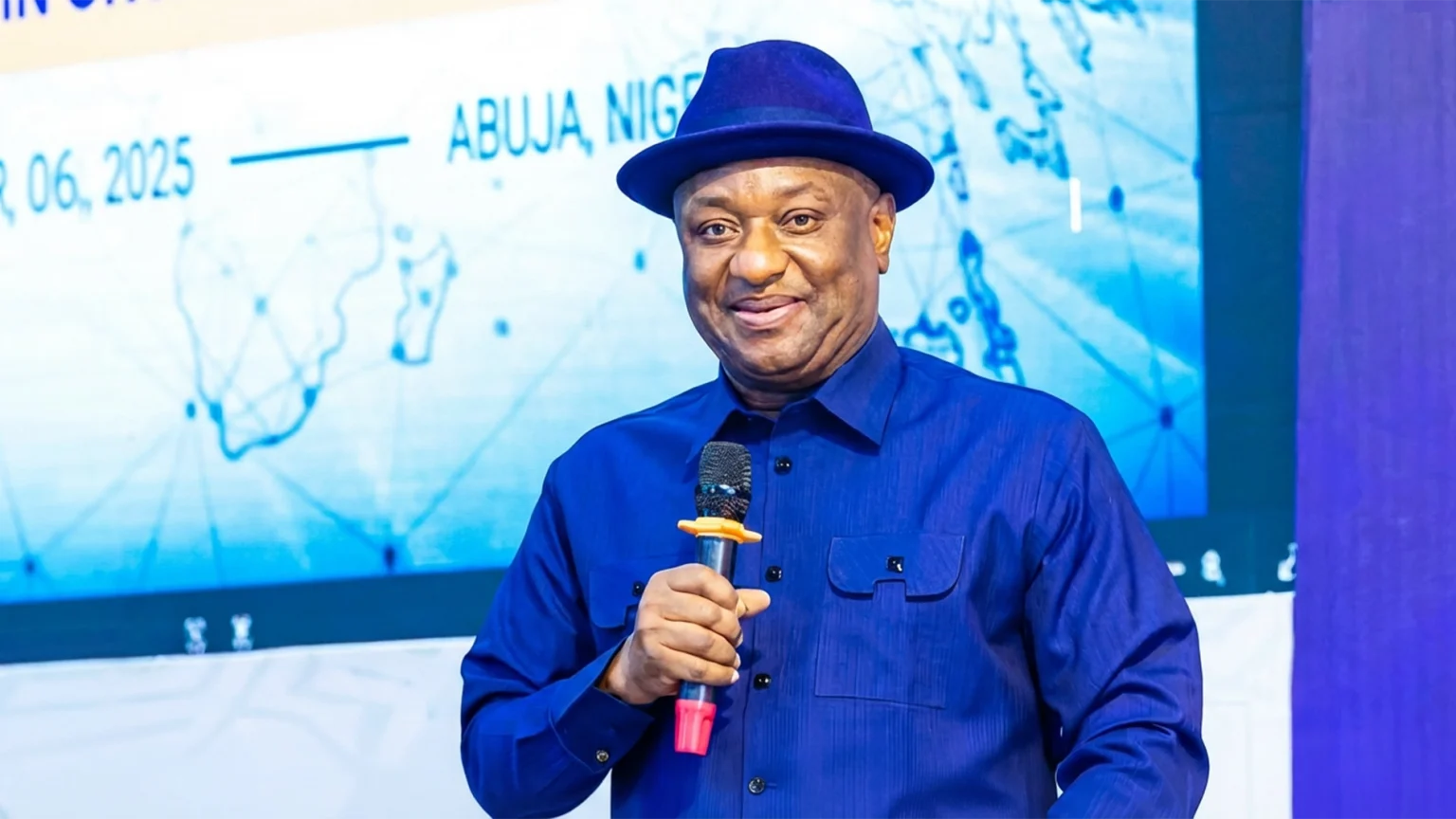
Minister of Aviation, Festus Keyamo
LAGOS, Nigeria – The Federal Government has announced plans to extend the Lagos rail network to the domestic and international terminals of Murtala Muhammed Airport (MMA), a project aimed at improving connectivity and reinforcing Lagos’ status as a leading aviation hub in Africa.
Minister of Aviation and Aerospace Development, Festus Keyamo, disclosed the plan on Monday at the opening of Invest Lagos 3.0, saying discussions with the Lagos State Government are already underway to commence the Lagos rail extension project.
According to Keyamo, the proposed extension will connect the existing rail line terminating at Ikeja Bus Stop to the General Aviation Terminal (GAT), pass through the Murtala Muhammed Airport Two (MMA2) operated by Bi-Courtney Aviation Services Limited (BASL), and continue to the international terminal.
“We are also planning to extend the rail line that ends at Ikeja Bus Stop. We are working with the Lagos State government to extend that rail line all the way to the local, through the Bi-Courtney Aviation Services Limited (BASL) and all the way to the international airport,” Keyamo said.
“That rail line is about to start. It’s the extension of the rail line. So, Lagos is just ready for the next big step in terms of its aviation activities,” he added.
“Just six hours across the Atlantic, you will get to South America from the Lagos airport. Six hours down, you’ll get to Southern Africa. Six hours to the Middle East, you’ll get to Dubai or Qatar. Six hours up, you will get to Europe, either France or London,” he said.
“That is the equidistant advantage that Lagos also provides as a hub for the whole of Africa. So, we will soon catch up with hubs like Addis Ababa, with hubs like Togo.”
About the Author


 Oluwatobi Adu