
Nigeria’s Student Loan Rollout Sparks Relief, Frustration, Uneven Access Across Campuses
 Korede Abdullah
(By Korede Abdullah, Juliet Jacob, Oluwafunbi Bello, Koko Maxwell, Gladness Otamere & Edino Chubiyo Cornelius)
The Nigerian Education Loan Fund (NELFUND) continues to reshape access to tertiary education as thousands of students report relief, setbacks and starkly uneven access across campuses in Lagos and the Federal Capital Territory. Africa Health Report (AHR) assesses the scheme following field visits to Lagos State University (LASU), the FCT College of Education Zuba, Baze University and the University of Abuja.
By 28 October 2025, NELFUND has disbursed ₦116.4 billion to 624,535 students, with spokesman Oseyemi Oluwatuyi confirming that ₦65.3 billion covers tuition while ₦51.1 billion supports accommodation, feeding and basic upkeep. Applications for the 2025/2026 cycle remain open until 31 January 2026.
LASU Students Hail Direct Tuition Payment
At LASU, direct tuition disbursement sparks widespread relief. A university official, Mr. Rauf Adenrele, says the process is “intentionally structured to ensure the prompt application of funds for tuition.” Students confirm quick updates to their portals and immediate clearance for registration.
Olamide, a 300-level Economics student, describes her journey as “rigorous but rewarding,” noting delays with her NIN verification but celebrating the final approval: “This loan saved my semester.”
Malik, an Engineering student, says approval came in “just about ten days,” adding: “We repay after getting a job; that’s fair.”
FCT College of Education Battles Temporary Exclusion
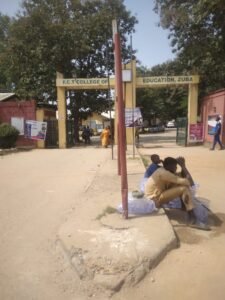
The FCT College of Education, Zuba faces a brief exclusion from the current cycle until the Registrar intervenes.
The Dean of Student Affairs, Mr. Usman Abubakar, says reinstatement is timely: “Students can finally focus on academics without the fear of fees.”
Lecturer Mr. Aminu Sanni calls for stronger sensitisation, stressing that many students “spend the little money they’re looking for just to pay someone at a café to register for the loan.” He urges a simpler, more inclusive application system.
Students in Zuba Voice Frustration
Student Yusuf Abdulkareem argues the platform still shuts out many eligible applicants: “It will still be given to those they want to give it to.” He demands a more functional website to reduce dropout rates.
Private Universities Remain Excluded
At Baze University, most students have never heard of NELFUND. Dr Idako Innocent confirms: “The loan is designed for public institutions,” but insists private-school students also face hardship and deserve inclusion.
University of Abuja Shows Zero Visibility
At the University of Abuja, students remain largely unaware of the scheme. Some who attempt to apply report the platform freezing after selecting their country. “We tried several times… Eventually, we just gave up,” says Accounting student Peter.
AHR finds no posters, sensitisation, or available officials. Students face empty offices and no guidance, leaving financial pressure untouched.
Experts Warn SDG 4 Progress Is at Risk
Analysts warn that poor awareness, technical failures and weak campus-level coordination threaten Nigeria’s ability to deliver equitable tertiary access. As Peter puts it: “If the loan exists, make it accessible.”
About the Author

 Mirian Gom


 Oluwatobi Adu