
 Mirian Gom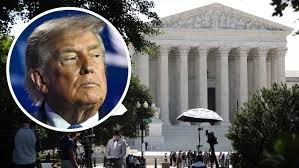
WASHINGTON, D.C. – The United States Supreme Court has rejected former President Donald Trump’s effort to end birthright citizenship, ruling that children born on American soil remain entitled to citizenship under the Constitution.
In a 6-3 decision delivered on Tuesday, the court upheld long-standing constitutional protections under the Fourteenth Amendment’s Citizenship Clause.
Trump had signed an executive order during his second term seeking to deny automatic citizenship to children born to parents residing illegally in the United States or those on temporary visas.
Lower courts blocked the order, ruling that the Fourteenth Amendment guarantees citizenship to nearly everyone born in the United States.
Chief Justice John Roberts, writing for the majority, affirmed that interpretation.
“Children born in the United States to parents unlawfully or temporarily present are subject to the jurisdiction of the United States and are citizens at birth under the Fourteenth Amendment’s Citizenship Clause,” Roberts wrote.
Trump personally attended oral arguments in April, an unusual move for a sitting president.
His administration argued that unrestricted birthright citizenship encourages illegal immigration and so-called “birth tourism.”
The administration also contended that the Fourteenth Amendment, adopted after the Civil War, was intended primarily to secure citizenship rights for formerly enslaved people rather than children of undocumented migrants.
However, the Supreme Court relied on established precedent, including the landmark 1898 case involving Wong Kim Ark, who was born in San Francisco to Chinese parents and later recognised as a US citizen.
The ruling marks another significant legal setback for Trump, following earlier Supreme Court decisions blocking portions of his tariff policies and his attempt to remove Federal Reserve Governor Lisa Cook.
Legal experts say the judgment preserves one of the most enduring constitutional principles in American immigration law.
About the Author

 Hope Ajayi

 Korede Abdullah