
One Lost SIM, One Frozen Life: The Hidden Cost of Nigeria’s Digital Banking Push
 Oluwafunbi Bello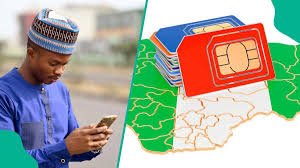
ABUJA, Nigeria – For millions of Nigerians, a mobile phone number is no longer just a tool for calls and text messages—it is a key to their financial existence. It unlocks bank accounts, receives transaction alerts, authorises transfers and verifies identities linked to the Bank Verification Number (BVN) and National Identification Number (NIN). But as Nigeria accelerates its digital banking revolution, a growing concern is emerging: what happens when that key is lost? As the country deepens the integration of banking, telecommunications and national identity systems to curb fraud and strengthen security, experts warn that rigid verification rules, SIM registration gaps and inaccessible recovery systems may inadvertently lock legitimate users out of essential financial services. Oluwafunbi Bello, writes.
The stakes are high. Nigeria’s Bank Verification Number database stood at about 68.6 million registrations by March 2026, while NIN enrolment has surpassed 120 million Nigerians, reflecting the country’s rapid shift towards digital identity systems. At the same time, over 150 million SIM cards have been linked to NIN records under government directives aimed at improving national security and combating fraud.
Yet beneath these impressive numbers lies a troubling question: are the systems designed to include Nigerians beginning to exclude them?
A Nation Going Digital—But Not Everyone Is Keeping Up
Nigeria’s digital identity infrastructure has expanded rapidly over the past decade. Introduced in 2014, the BVN was designed to create a unique biometric identity for bank customers and combat financial fraud. Today, it sits at the centre of the country’s banking architecture.
The growth has been remarkable. BVN enrollment rose from 51.9 million in 2021 to 68.6 million in early 2026, while active bank accounts exceeded 320 million by 2025, underscoring the increasing digitisation of financial services.
But inclusion remains uneven.
According to the latest Access to Financial Services survey by EFInA, 26 per cent of Nigerian adults remain financially excluded, despite improvements in formal financial inclusion from 56 per cent in 2020 to 64 per cent in 2023.
Financial experts fear that stricter identity requirements could widen that gap.
Mr Ime Effiong, a financial expert, said BVN-linked security measures have improved banking safety but can unintentionally exclude legitimate customers.
“These measures exist for good reasons. They help reduce identity fraud, improve customer identification and strengthen the financial system. However, if the requirements become too difficult for certain groups to meet, legitimate customers may face delays, restrictions or reduced access to banking services.”
According to him, elderly people often struggle with biometric verification and digital banking channels, while residents of remote communities face challenges accessing bank branches and verification centres.
“People with documentation inconsistencies, disabilities or limited access to technology may also find it difficult to satisfy verification requirements. The challenge for regulators is balancing security with financial inclusion.”
When a Stolen Phone Becomes a Financial Emergency
For Mr Irabor Samuel, the dangers of this digital dependence became evident after his mobile phone was stolen.
The SIM card inside the phone was linked to his BVN and multiple bank accounts. Yet instead of attempting to recover the line, he focused on securing his finances, fearing the process would be complicated.
“When the phone was stolen, I knew the SIM was linked to my BVN and bank accounts. But I honestly did not bother trying to recover it because I was not sure the process would be straightforward.”
“I immediately focused on securing my accounts. The experience made me realise how much access to banking now depends on having control of a phone number.”
Samuel said the incident exposed the vulnerability many Nigerians face when mobile numbers become central to financial authentication.
“If someone loses access to a SIM linked to their bank account, it can quickly become a serious problem. Many people do not think about it until it happens to them.”
His fears are not unfounded. Analysts note that as digital banking expands, phone numbers have increasingly become proxies for identity. Losing one can disrupt access to banking apps, transaction alerts, one-time passwords and account recovery systems.
The Risks of Dormant Numbers
Another customer, Mrs. Olawuyi Mercy, encountered a different challenge after her little-used SIM card was deactivated.
“I hardly used the SIM because it was my secondary line. One day I realised it had been blocked and I could no longer access it.”
“The problem was that the number was connected to some services I still needed. It turned out to be more stressful than I expected.”
She said many Nigerians underestimate the implications of losing access to a registered number.
“People assume they can always get their line back whenever they want, but that is not always the case. If the number is linked to important records, the consequences can be serious.”
As telecom operators deactivate inactive lines and recycle numbers, experts warn that stronger safeguards are needed to protect consumers whose banking identities remain attached to those numbers.
When the System Works
Not every customer faces obstacles.
Mr. Mustapha Yakubu successfully recovered his lost SIM after visiting his network provider.
“I lost my phone and visited my network provider’s office immediately. After verifying my details, I was able to retrieve the SIM without major complications.”
“The process was not perfect, but it showed that proper registration and accurate records can make a difference.
Despite the positive experience, he believes improvements remain necessary.
“The process should be faster and more accessible. People should not have to worry about losing access to essential banking services because of a problem with a phone number.”
Security Versus Inclusion
Experts say Nigeria’s challenge is not whether to build stronger identity systems, but how to ensure they remain inclusive.
Effiong noted that while many banks offer digital channels for updating customer information, significant barriers remain.
“For customers with valid identification, active phone numbers and access to a branch, the process is often straightforward. But many banks still require physical visits for sensitive updates such as changing phone numbers or correcting personal information. That can be difficult for elderly people, persons with disabilities and Nigerians living far from banking facilities.”
The Search for Solutions
Analysts argue that Nigeria can strengthen security without sacrificing accessibility.
One proposed reform is risk-based verification, where low-risk transactions require simpler verification while high-risk activities undergo stricter checks.
Another solution is multi-factor biometric recovery systems, allowing customers to recover accounts using fingerprints or facial recognition rather than relying solely on a phone number.
Nigeria has already demonstrated the potential of remote identity systems. The Non-Resident BVN (NRBVN) initiative enables Nigerians abroad to enrol for BVN remotely, showing that digital verification can be implemented beyond physical branches.
Experts also recommend: Remote verification technologies, including secure video verification and digital identity wallets, telecom-bank integration systems that automatically synchronise customer records across databases, mobile verification units for rural communities lacking access to bank branches, alternative authentication methods, such as email-based verification or hardware security tokens, real-time complaint resolution systems for customers experiencing identity mismatches.
These measures, experts say, would reduce dependence on a single SIM card while preserving financial security.
A Digital Future That Leaves No One Behind
Nigeria has set an ambitious target of expanding financial inclusion and deepening digital payments. Yet the success of that vision depends not only on stronger security but on ensuring no one is left behind.
As the country races towards a digital future, policymakers face a delicate balancing act: protecting customers from fraud while protecting them from exclusion.
Because in today’s Nigeria, losing a phone number may no longer mean losing a means of communication.
It could mean losing access to one’s financial life.
About the Author

 Oluwatobi Adu


 Hope Ajayi