
 Mirian Gom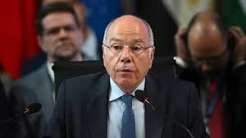
ABUJA, Nigeria – The Group of Four (G4) countries — Brazil, Germany, India and Japan — have reiterated their support for enhanced African representation on the United Nations Security Council, including a permanent seat.
The four foreign ministers made the position known in a joint statement after meeting in New York on Tuesday on the margins of the 81st session of the UN General Assembly.
The G4 ministers said reform of the 15-member Security Council was necessary to reflect contemporary geopolitical realities, arguing that its current structure was established eight decades ago.
They said the Council’s representativeness, legitimacy, credibility and effectiveness were in question and called for expansion in both the permanent and non-permanent categories.
The ministers specifically reiterated their support for Africa’s case for enhanced representation, “including in the permanent category of membership.”
They also called for improved representation for under-represented and unrepresented regions and groups, including Africa, Asia-Pacific and Latin America and the Caribbean and welcomed the African Group’s reform model presented during the previous session of the Intergovernmental Negotiations on Security Council reform.
The African Union’s Common African Position, expressed through the Ezulwini Consensus and Sirte Declaration, calls for at least two permanent seats and five non-permanent seats for Africa. It also calls for the same prerogatives and privileges as existing permanent members, including the veto if the veto remains part of the Council’s structure.
The G4 said the existing Intergovernmental Negotiations process had failed to produce concrete outcomes after 18 years of discussions.
The ministers said they would work with other reform-oriented groups to develop a consolidated model reflecting what they described as the position of the majority of UN member states.
They also said text-based negotiations should begin as a priority. “Consensus is not the benchmark for decision-making on Security Council reform,” the G4 said, referring to the UN Charter and the mandate of the Intergovernmental Negotiations.
About the Author


 Oluwatobi Adu